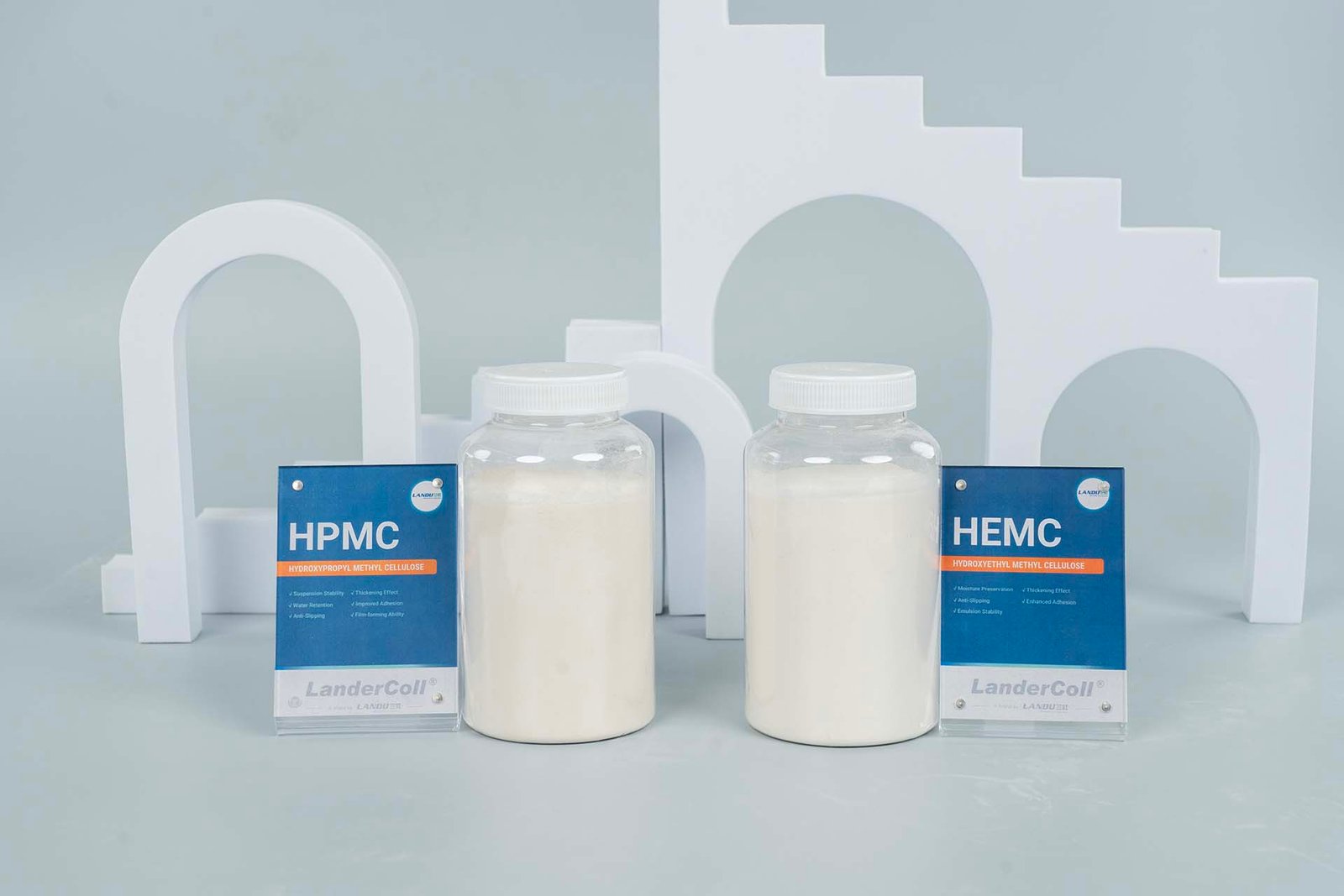
HPMC vs HEMC (MHEC) for Tile Adhesive
Which cellulose ether is better for hot weather? A practical, evidence-led comparison of open time, water retention, viscosity, test methods and grade selection.
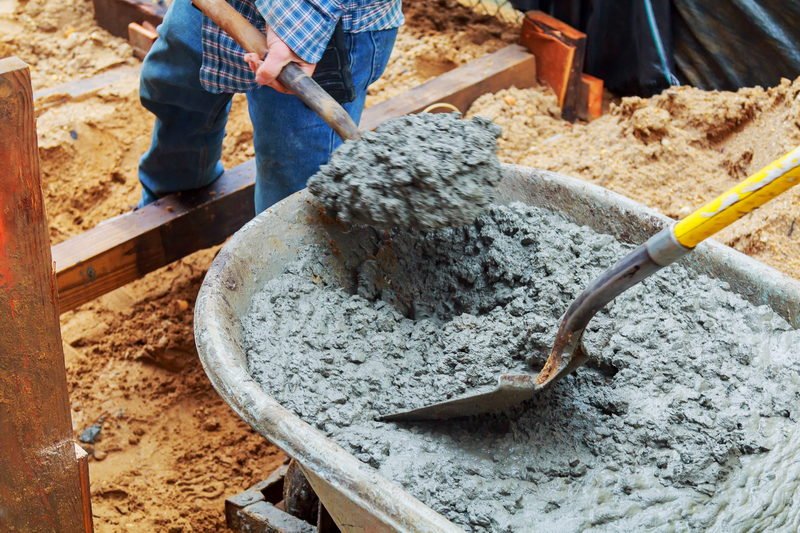
 Tile adhesive application
Neither HPMC nor HEMC is always superior. Both can support hot-weather tile adhesives, but results depend on the exact grade, dosage, cement–RDP system and real open-time testing.
Read the verdict →A tile adhesive can pass controlled laboratory tests yet develop a surface skin too quickly on a hot, dry construction site. When that happens, the manufacturer may need to review the cellulose ether grade—not just cement content or polymer dosage.
For dry-mix producers supplying the Middle East, India and other hot-climate markets, the choice between hydroxypropyl methyl cellulose (HPMC) and hydroxyethyl methyl cellulose (HEMC, also known as MHEC) is a practical formulation and purchasing decision. Both materials affect fresh mortar behavior, but neither chemical family guarantees longer open time by itself.
This guide explains what differs chemically, which measurements determine successful tile installation, how to compare LANDERCOLL grades, and how to choose an additive based on the finished adhesive rather than marketing claims.
Engineering recommendation. Shortlist HPMC and HEMC using their TDS information, then test the complete mortar at matched conditions. Compare standardized open-time adhesion, water retention, slip, application workability and hardened performance. Do not treat isolated cellulose ether viscosity as proof of tile adhesive quality.
HPMC vs HEMC: what is the difference?

HPMC
Nonionic cellulose ether with methyl and hydroxypropyl substituents. Used for water retention, consistency and fresh-mortar rheology in cement-based tile adhesives.
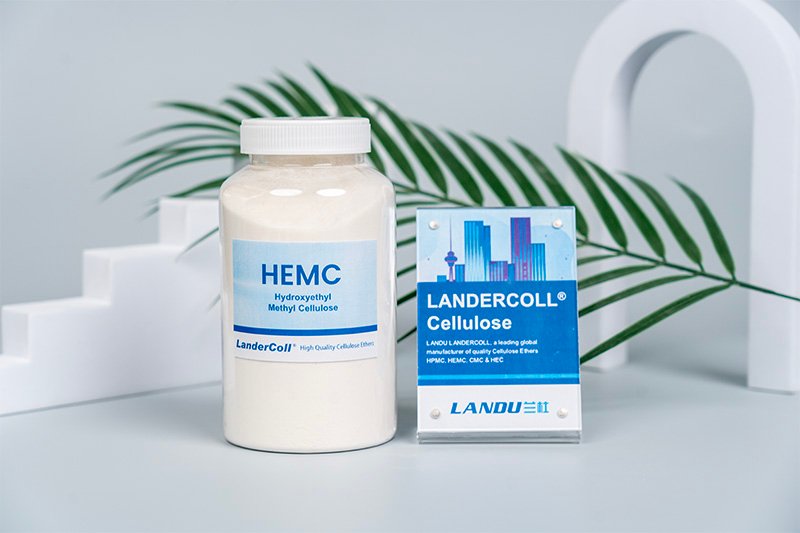
HEMC / MHEC
Nonionic cellulose ether with methyl and hydroxyethyl substituents. Also used to control water transport, mortar consistency and application behavior.
HEMC and MHEC describe the same cellulose ether family. The different ordering of the abbreviation should not be confused with HPMC. Product behavior also depends on substitution degree, molecular weight, chemical distribution and grade modification.
| Evaluation factor | HPMC | HEMC / MHEC |
|---|---|---|
| Chemical substituents | Methyl + hydroxypropyl | Methyl + hydroxyethyl |
| Water retention | Effective with the appropriate grade and dosage | Effective with the appropriate grade and dosage |
| Hot-weather application | Depends on grade and formulation | Depends on grade and formulation |
| Open-time contribution | Must be verified in the finished adhesive | Must be verified in the finished adhesive |
| Rheology / slip control | Grade- and dosage-dependent | Grade- and dosage-dependent |
| Thermal gelation | Specific to polymer structure and test conditions | Specific to polymer structure and test conditions |
| Supplier decision | Compare measurable application performance and total cost per tonne of compliant adhesive | |
This is a qualitative material comparison. It is not a ranking based on unpublished laboratory data and does not imply one family always outperforms the other.
Why tile adhesive loses open time in hot weather
Higher ambient temperatures, lower relative humidity, wind and substrate absorption can increase water loss from an adhesive after it has been combed onto the surface. Exposed ridges may form a skin before the tile is placed. Even though the material underneath still looks wet, surface wetting and mortar transfer can deteriorate.

Rapid evaporation
Dry air and airflow accelerate exposed-surface moisture loss and can contribute to early skinning.
High suction
Porous or warm surfaces may draw water away from fresh adhesive and change local consistency.
Changing consistency
Temperature, water movement and cement reactions affect troweling, ridge stability and wetting.
Open time is not pot life
Pot life concerns how long the mixed product remains usable in its container. Open time concerns whether a tile placed after a specified interval can develop the required bond. A workable bucket does not demonstrate that adhesive ridges spread 20 or 30 minutes earlier are still suitable for tile placement.
Real hot-weather validation must therefore evaluate the spread adhesive, not only solution viscosity or the appearance of the mortar.
How HPMC and HEMC work inside cement mortar
Both polymers interact with the aqueous phase of the mortar. Their swelling, hydration and associated structures influence viscosity and resistance to water transport. Their behavior in cement is also affected by dissolved ions, cement hydration and the other components of the mixture.
HPMC: retention and flow control
Research on HPMC-modified cement mortar identifies relationships between plastic viscosity, hydrated polymer structures and water-retention behavior. HPMC can improve the mortar’s capacity to restrict water movement, but increasing viscosity does not guarantee proportional improvements in open time or final bond strength. See the HPMC water-retention research.
HEMC: swelling and water-transport restriction
Research on MHEC describes concentration-dependent effects, including water sorption and swelling as well as the development of associated hydrocolloidal structures that impede liquid movement. The research provides an explanation for HEMC’s water-retention function; it does not establish universal superiority over HPMC. See the MHEC mechanism study.
Effects on hydration and setting
The chemical substitution of cellulose ether can influence cement hydration kinetics. In research comparing HPMC and HEMC, methoxyl substitution was an important determinant of hydration delay in the investigated samples. It would therefore be unsound to predict setting behavior from the abbreviations HPMC and HEMC alone. Read the comparative hydration paper.
Practical implication: A 100,000 mPa·s HPMC and a 100,000 mPa·s HEMC are not automatically functionally interchangeable. Their published viscosity may match while water retention, skinning behavior and setting effects differ.
Water retention and open time must be tested separately
Water retention helps maintain moisture in fresh mortar; open time is judged through the bond developed after a defined interval between adhesive spreading and tile placement. These properties can be related, but they measure different things.
A 2023 study of cellulose ethers in cement-based tile adhesive reported that formulations adjusted to similar water-retention levels could still show different early skin-formation behavior. Consequently, a higher water-retention percentage cannot be used as the only basis for choosing the better hot-weather cellulose ether. Read the early-skin-formation study.
Water retention
Helps assess the ability of the formulation to resist loss of mobile water under a defined test procedure.
Open-time adhesion
Shows whether the adhesive can develop the specified bond after tiles are placed following a controlled exposure period.
Equal water retention does not necessarily mean equal open time.
For procurement decisions, request application data from the full tile adhesive formulation. Ask how the samples were conditioned, which cement and RDP were used, how long the adhesive was exposed before tile placement, and what tensile adhesion results followed.
Does HEMC really have better heat resistance?
It is common to hear that HEMC is better suited to hot environments because of its thermal behavior. That statement can be useful as a reason to test an HEMC grade, but it is not a proven performance rule for every commercial product.
Methyl-substituted cellulose ether solutions can show temperature-dependent association and thermal gelation. The characteristic temperature changes with polymer structure, solution concentration, substitution and measurement method.
A simple aqueous solution also behaves differently from a cement mortar containing cement particles, mineral fillers, dissolved salts, polymer powder and reactive binder components. A higher solution gelation temperature should not be presented as an automatic indicator of longer open time on a construction site.
Recommended selection principle: Use grade-specific thermal data to shortlist materials. Use controlled mortar tests at representative application temperatures to make the final decision.
EN 12004 and ISO 13007: what a grade actually needs to deliver
EN 12004-1 and EN 12004-2 describe European requirements, classifications and test methods for ceramic tile adhesives. ISO 13007-1 and ISO 13007-2 provide international specifications and testing methods. These classifications apply to the complete adhesive, not to the raw cellulose ether.
| Class | Meaning | Selected criterion |
|---|---|---|
| C1 | Normal cementitious adhesive | Relevant specified tensile adhesion strengths ≥ 0.5 N/mm² |
| C2 | Improved cementitious adhesive | Relevant specified tensile adhesion strengths ≥ 1.0 N/mm² |
| T | Reduced slip | Vertical slip ≤ 0.5 mm |
| E | Extended open time | Tensile adhesion ≥ 0.5 N/mm² after at least 30 minutes |
| S1 | Deformable adhesive | Transverse deformation ≥ 2.5 mm and < 5 mm |
Selected EN 12004-1:2017 criteria, not the complete classification specification. Follow the edition and full method required for the target market. Basic open time for normal-setting cementitious adhesives includes the ≥ 0.5 N/mm² requirement at no less than 20 minutes.
An HPMC or HEMC supplier may recommend grades for C1, C2 or C2TE formulations. This does not mean an individual cellulose ether grade is itself “C2TE-certified.” The finished adhesive must meet the applicable standardized requirements.
Official standard listings: ISO 13007-1 and ISO 13007-2.
Which LANDERCOLL HPMC and HEMC grades should you compare?
LANDERCOLL’s published catalogue includes HPMC K-series and HEMC/MHEC EM-series products. A practical first comparison is a pair of grades with comparable published solution viscosity, then further optimization using actual mortar performance.
| HPMC example | HEMC example | NDJ, 2% solution | Brookfield RV, 2% solution |
|---|---|---|---|
| K100 | EM100 | 85,000–110,000 mPa·s | 45,000–60,000 mPa·s |
| K40H | EM40H | 35,000–45,000 mPa·s | 20,000–24,000 mPa·s |
| K200 | EM200 | 185,000–215,000 mPa·s | 65,000–80,000 mPa·s |
Illustrative ranges from LANDERCOLL’s published product/application catalogue, rather than independent batch tests. Request the latest grade-specific TDS and COA; verify solution concentration, temperature, instrument settings and product availability.
K100 and EM100 can be candidates for an initial evaluation because their published viscosity ranges overlap. That does not demonstrate equal open time, heat response, water retention or performance in a specific cement formulation.
More information: LANDERCOLL HPMC grades · LANDERCOLL MHEC grades · HPMC for tile adhesive · MHEC for tile adhesive.
Compare K100 and EM100 in your own formulation
Send your current TDS, dosage and open-time target. Request suitable grade candidates and test samples from LANDERCOLL.
A controlled protocol for HPMC vs HEMC testing
The most useful comparison keeps the cement, filler grading, RDP grade, mixing conditions and other additives consistent. It then varies one cellulose ether candidate at a time and records the consequences.

Why test in the finished mortar?
Aqueous solution viscosity is not enough to predict the performance of a reactive cementitious adhesive. Controlled mortar testing helps isolate the effects of water demand, skinning, setting and additive interactions.
Use standardized testing for classification and separately documented hot-climate screening for application-specific selection.
Fix the base recipe
Use the same cement, mineral filler, RDP, other additives, mixing sequence and batch preparation for all candidates.
Choose candidates and dosages
Compare matched-grade HPMC and HEMC candidates over a supplier-appropriate dosage matrix. Keep records of exact batch and test conditions.
Run two water strategies
Compare a fixed mixing-water series and a separately measured matched-workability series. Never mix their conclusions without identifying water changes.
Screen hot-weather behavior
As an example, test at 23°C/50% RH and 35°C/30% RH with controlled substrates. These are illustrative internal conditions, not a formal EN/ISO procedure.
Measure real performance
Record water retention, spreadability, practical mortar transfer, slip, open-time tensile adhesion, setting and cured adhesion under the required method.
Repeat and decide
Review averages, variation, failure modes, effective dosage and total cost per tonne. Confirm promising candidates across production batches.
Illustrative screening matrix
| Trial | Cellulose ether | Example dry-mix dosage | What to compare |
|---|---|---|---|
| H-1 / M-1 | HPMC / HEMC | 0.30% | Consistency, open time, slip, final bond strength and cost |
| H-2 / M-2 | HPMC / HEMC | 0.40% | |
| H-3 / M-3 | HPMC / HEMC | 0.50% |
Illustrative screening dosages, not validated production recommendations. Adjust candidate levels to the supplier’s grade-specific advice, current formula and intended classification. Do not invent performance data where tests have not been performed.
Do not evaluate cellulose ether separately from RDP
Many improved tile adhesive formulations use redispersible polymer powder (RDP) to help achieve application-specific properties. While RDP and cellulose ether have distinct primary functions, their effects in cement mortar can interact.
A published investigation of different cellulose ethers in ceramic tile adhesives found that both cellulose ether and latex powder selection influenced setting, skinning and adhesion behavior. This means an HPMC-to-HEMC change is not necessarily a simple one-for-one substitution in a polymer-modified adhesive. Read the tile adhesive study.
Increasing RDP to compensate for poor open time may raise formula cost without addressing premature surface drying. Diagnose the failure mechanism first, then adjust relevant raw materials in a controlled test plan.
Common hot-weather failures and what to investigate
| Problem | Potential drivers | Recommended test |
|---|---|---|
| Adhesive skins too quickly | Evaporation, wind, insufficient wetting stability | Open-time adhesion and skinning under controlled exposure |
| Rapid water loss on porous substrates | Substrate suction, limited retention | Substrate conditioning and water-retention comparison |
| Poor mortar transfer | Skin formation, unsuitable workability | Tile wetting observations with adhesion testing |
| Tile slips on walls | Water dosage, unsuitable rheology | Standardized vertical slip and consistency measurements |
| Excessive stickiness | Too much thickening or poor additive balance | Grade/dose matrix at matched workability |
| Inconsistent batches | Raw material variation, mixing changes | COA trending and controlled batch replicates |
Consider a hypothetical producer whose adhesive meets standardized laboratory requirements but skins prematurely during summer trials. The right next step is not automatically to switch to HEMC. First establish the role of temperature, substrate suction, humidity and wind; then compare a current HPMC grade, a modified HPMC candidate and a shortlisted HEMC grade in the same formulation.
Compare cost per tonne—not price per kilogram
A lower-priced cellulose ether can be more expensive in the finished adhesive if it requires a higher dosage to reach equivalent performance. The economic comparison should use the lowest validated effective dose for each candidate.
| Illustrative example | Candidate A | Candidate B |
|---|---|---|
| Price per kilogram | $4.00 | $3.20 |
| Dosage by dry-mix mass | 0.30% | 0.40% |
| Use per tonne | 3.0 kg | 4.0 kg |
| Direct CE cost / tonne | $12.00 | $12.80 |
Hypothetical prices and dosage assumptions only; not LANDERCOLL quotes or evidence of equivalent performance. Production economics must also account for consistency, polymer content, water demand and specification compliance.
What technical buyers should request before ordering
Before approving a new cellulose ether supplier, request documentation that matches the actual material and intended application.
- Current grade-specific Technical Data Sheet (TDS)
- Viscosity method, concentration and temperature
- Batch Certificate of Analysis (COA)
- Moisture, pH and other agreed QC characteristics
- Application samples for in-house tile adhesive testing
- Batch traceability, packaging and lead-time information
- Technical input on suitable alternatives and dosage
LANDERCOLL offers HPMC and HEMC/MHEC products for construction applications. Discuss grade selection with the team using your existing adhesive class, cement system, current cellulose ether and main performance problem.

Ask the supplier to explain the limits of its recommendation. Product selection should be supported by grade documentation and application tests, not unsupported claims that HEMC always has a higher gel temperature or that high viscosity always produces the longest open time.
Frequently asked questions
Is HEMC better than HPMC for hot-weather tile adhesive?
Not universally. HEMC can be a worthwhile hot-climate candidate, but the preferred grade must be identified using the finished adhesive’s open time, workability, slip resistance and cured adhesion at representative conditions.
Are MHEC and HEMC the same material?
Yes. MHEC and HEMC are alternative abbreviations for methyl hydroxyethyl cellulose / hydroxyethyl methyl cellulose. HPMC is a different cellulose ether containing hydroxypropyl rather than hydroxyethyl substituents.
Can HPMC be replaced by HEMC at the same dosage?
Equal dosage can be tested as a first comparison, but does not guarantee equal consistency, setting or open-time behavior. Follow up with a dosage optimization based on measured mortar performance.
Does higher cellulose ether viscosity mean longer open time?
No. Solution viscosity is one grade specification. Open time also depends on skin formation, water movement, cement and polymer interactions, ambient conditions and tile wetting.
What dosage should be used in tile adhesive?
There is no universal dosage. Use an application-appropriate supplier range, then refine it by testing your cement, fillers, RDP, water demand and target adhesive classification.
Can cellulose ether alone deliver a C2TE classification?
No. C2TE describes the performance of the complete cement-based adhesive. The finished formulation must pass the required adhesion, slip and extended-open-time criteria.
How do I compare LANDERCOLL K100 and EM100?
Request current TDS and representative samples, then compare each in the same base recipe. Test fixed-water and matched-workability conditions, and verify open-time tensile adhesion plus hardened performance.
What should I send when requesting technical samples?
Provide the target classification, current cellulose ether grade and dosage, cement/RDP system, expected ambient conditions, formulation problem and estimated purchasing volume. The contact page can be used to send these details.
Final verdict: choose by validated mortar performance
HPMC and HEMC both provide useful water retention and fresh-mortar control, and both have grades suitable for tile adhesive development. Their differences in chemical structure do not justify a blanket claim that one is more heat-resistant or always delivers longer open time.
For hot-climate manufacturers, prioritize measurable open-time adhesion, controlled water retention, practical workability, slip resistance, compatibility with the cement–RDP system and consistent production economics.
The best cellulose ether is the grade that repeatedly helps your finished adhesive meet its performance requirements—not the grade with the biggest viscosity number.
Technical references
- Pourchez, J., et al. (2006). HPMC and HEMC influence on cement hydration. Cement and Concrete Research. DOI: 10.1016/j.cemconres.2005.08.003.
- Bülichen, D., Kainz, J., & Plank, J. (2012). Working mechanism of methyl hydroxyethyl cellulose (MHEC) as water retention agent. Cement and Concrete Research. DOI: 10.1016/j.cemconres.2012.03.016.
- Water Retention Mechanism of HPMC in Cement Mortar (2020). Materials, 13(13), 2918. DOI: 10.3390/ma13132918.
- Petit, J.-Y., & Wirquin, E. (2013). Evaluation of various cellulose ethers performance in ceramic tile adhesive mortars. International Journal of Adhesion and Adhesives. DOI: 10.1016/j.ijadhadh.2012.09.007.
- The influence of hydroxyalkyl methylcellulose on early skin formation in cement-based tile adhesive (2023). ce/papers. DOI: 10.1002/cepa.2984.
- EN 12004-1:2017 and EN 12004-2:2017 — Requirements, classification and test methods for adhesives for ceramic tiles.
- ISO 13007-1 and ISO 13007-2 — Ceramic tile adhesives, requirements and testing.
- LANDERCOLL. Cellulose ether product catalogue and application documentation. Verify current specification details before bulk purchasing.
The referenced studies describe their specific formulations and laboratory conditions. They are not independent certifications of the named LANDERCOLL grades. All dosage levels, climate screens, economic examples and troubleshooting scenarios in this article are illustrative unless explicitly identified as published specifications.
Not sure whether HPMC or HEMC fits your tile adhesive?
Tell our team about your formulation, target performance and hot-weather application challenges. Request relevant grade candidates and samples for your laboratory evaluation.
- Current cellulose ether grade
- Target C1 / C2 / C2TE class
- Typical site temperature
- Open time & workability issues
- Cement and RDP details
- Estimated purchase volume
Request sample & TDS
Use LANDERCOLL’s existing contact form to send your requirements. No unverified third-party form or data collection script is added to this article.
Open the sample request form ↗Email our technical team ↗Sales@landu-china.com · Phone / WhatsApp: +86 180 4322 4403. Sample availability and technical recommendations depend on the inquiry.LANDERCOLL® / Shandong LANDU New Material Co., Ltd. · Official website · This article is general technical guidance. Consult product-specific TDS, applicable standards and your own laboratory results before industrial adoption.