NOVASTAR™ / Functional Construction Additives

Hydroxypropyl Starch Ether (HPS)

A construction-grade starch ether for tuning anti-sag behavior, thixotropic response and smooth application in cement- and gypsum-based dry-mix mortars.

NOVASTAR™ HPS is a complementary rheology modifier used alongside cellulose ethers such as HPMC and HEMC/MHEC. It helps formulators adjust fresh-mortar stability without assuming that higher viscosity alone is the answer to every slip, slump or troweling problem.

Anti-sag & slip controlFresh-mortar rheologyHPMC / HEMC complement

For dry-mix mortar manufacturers, formulation engineers, technical buyers and distributors.

LANDU hydroxypropyl starch ether product photograph from the NOVASTAR product library
NOVASTAR™ HPS — starch ether for construction additive evaluation
01 / Technical information

HPS Product Identity & Technical Reference

Hydroxypropyl starch ether is starch chemically modified with hydroxypropyl groups. In construction dry mixes, it is selected for fresh-state rheology rather than as a complete substitute for cellulose ether, a polymer binder or a ready-to-use mortar formulation.

Material nameHydroxypropyl Starch Ether
AbbreviationHPS
BrandNOVASTAR™ by LANDU
Principal functionRheology & anti-sag control
PropertyValue shown on current LANDU HPS pageQualification note
AppearanceFine white powderCheck received material against approved grade documentation.
pH8.5–11Solution concentration and measurement conditions require confirmation.
Cold-water behaviorListed as soluble in cold waterDispersibility and hydration depend on the supplied grade and processing conditions.
Fineness<350 µmConfirm screening and test method on the current TDS.
Viscosity400–12,000 mPa·s5% aqueous solution as stated on this page; compare only under matched instrument, temperature and conditioning parameters.
Moisture≤5%Confirm approved test method and batch limit.
Hydroxypropyl substitution0.2–1.2 (reported)Confirm whether the value denotes DS, molar substitution or another defined supplier method.

Values above reproduce the published figures from this specific LANDU page. They are product-page references, not a grade-specific released specification or batch CoA. Request the current TDS before defining incoming-quality acceptance criteria.

Procurement checkpoint

Compare grades under the same test conditions

Solution viscosity alone cannot predict how HPS performs in a cement- or gypsum-rich mortar. Compare water demand, fresh consistency and at-rest resistance using the same binder, filler, cellulose ether, mixing sequence and conditioning time.

Request HPS grade documentation ↗
What to request

Documents for qualification

  • Current grade-specific TDS and SDS
  • Relevant viscosity method and hydration conditions
  • Sampling details and batch CoA requirements
  • Packaging, lead-time and storage guidance
02 / Performance-oriented selection

Select an HPS Performance Profile by Mortar Requirement

The correct HPS selection begins with an application issue, not a viscosity label. Use the following screening profiles to discuss a suitable NOVASTAR™ grade with LANDU. Final product codes and specifications must be matched to an approved TDS.

Profile A · Vertical application

Anti-Slip & Anti-Sag

Prioritize wet structural resistance after placement, while checking that adhesive ridges still collapse sufficiently for proper substrate and tile wetting.

Typical systems: wall tile adhesives and vertical renders.

Profile B · Smooth finishing

Trowelability & Texture

Target easy spreading, controlled drag and a uniform surface without generating an excessively sticky or overly structured mix.

Typical systems: wall putty, skim coats and hand-applied plasters.

Profile C · Process balance

Shape Retention & Flow

Balance pumpability or spreading under shear with controlled shape recovery at rest. The required balance differs between spray plaster and hand application.

Typical systems: gypsum plasters and selected repair mortars.

Selection principle: HPS should be tested alongside the current HPMC/HEMC grade rather than assessed in isolation. A useful grade is one that improves the target behavior without unacceptable loss of open time, application feel, finishing quality or setting performance.
03 / Chemical structure & functional mechanism

How Hydroxypropyl Starch Ether Changes Fresh-Mortar Behavior

Hydroxypropyl substitution modifies interactions between starch chains and water. Depending on grade and mortar chemistry, the resulting starch ether can alter the flow curve and structural recovery of fresh mortar. The practical target is a mix that moves easily under the trowel but resists sagging once in place.

Mechanism 01

Water Interaction

Hydrated starch-ether chains contribute to the aqueous phase and influence particle–polymer interactions. The effect depends on grade and dispersion conditions.

Mechanism 02

Low-Shear Structure

HPS can contribute to fresh-mortar resistance at low shear, which may reduce uncontrolled flow and downward displacement on vertical surfaces.

Mechanism 03

Thixotropic Response

A formulation can become easier to move under mixing or troweling and regain structure during rest. Recovery is formulation-dependent, not guaranteed by a viscosity number.

Mechanism 04

Interaction With Binders

Starch ethers may also influence cement hydration and setting. Check working time and hardening alongside rheology, particularly when trial levels are changed.

HPS is complementary—not interchangeable—with cellulose ether. HPMC and HEMC typically take a central role in water retention and broad consistency control. HPS is often evaluated for additional structure, anti-slip or handling refinement. Neither additive alone guarantees finished tile-adhesive adhesion, open time or certification.

Why viscosity is not the whole story

Two mortars may have similar apparent viscosity but behave differently after a trowel stroke. Yield stress, shear history, resting time, water content and aggregate distribution influence the shape of adhesive ridges and the ability of a plaster to stay on a wall.

Controlled comparison of a reference mortar with an HPS-modified mortar gives better evidence than judging a powder from a single Brookfield reading.

Review the evaluation approach ↗
LANDU laboratory area for formulation and material evaluation
LANDU laboratory photography; grade-specific performance should be verified in controlled mortar trials.
04 / Application engineering

Hydroxypropyl Starch Ether Applications in Dry-Mix Mortar

Application requirements differ by binder, installation method and layer thickness. These examples describe where HPS may be evaluated and what a formulation engineer should measure—without treating a single additive as a complete solution.

Tile adhesive application scenario from the LANDU site media library
01 / Tile adhesives

Anti-Slip Performance on Vertical Tiles

Formulation challenge: Tiles may move downward after placement if the wet adhesive has insufficient at-rest structure. Simply increasing cellulose-ether viscosity can create excessive drag or poor ridge collapse.

Role of HPS: Screen HPS as a secondary rheology modifier to tune slip resistance while retaining workable spreading and sufficient tile wetting.

Check: Slip, ridge stability, wetting, open time and adhesive performance on the finished tile-adhesive formulation (EN 12004-2 test methods where applicable).

Explore tile adhesive additives ↗
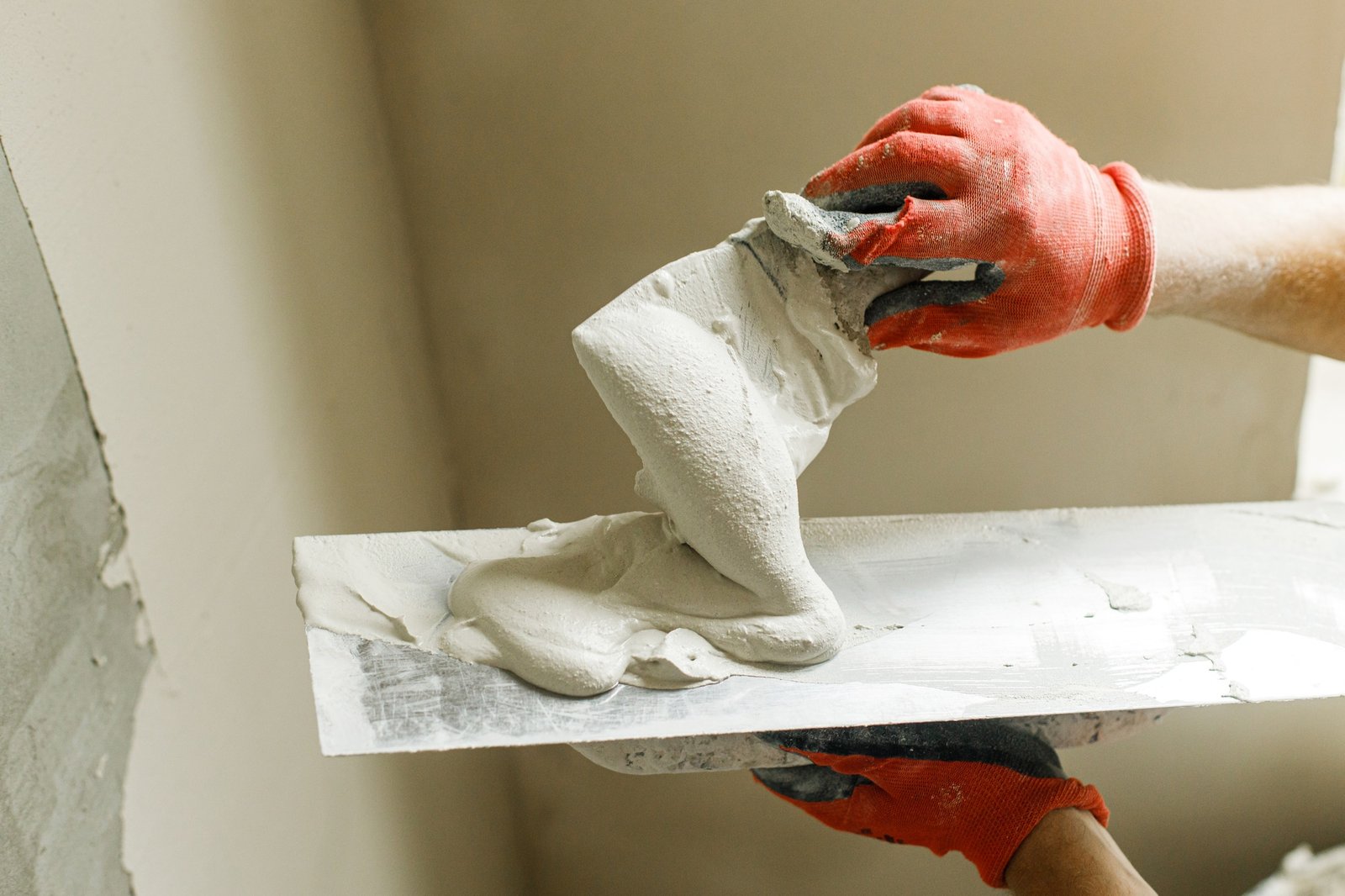
Worker applying wall putty on a wall surface
02 / Wall putty & skim coats

Smooth Spreading Without Wall Slump

Formulation challenge: Thin-layer finishing materials need controlled blade drag, uniform film build and stable vertical application; too much structure can leave tool marks.

Role of HPS: Evaluate whether the chosen starch ether improves the balance between creamy consistency and resistance to running, especially alongside the base cellulose ether.

Check: Knife feel, edge build-up, trowel marks, drying behavior, surface finish and any change in water demand.

Explore wall putty and skim coat ↗

Worker applying gypsum plaster with a hand trowel
03 / Gypsum-based plaster

Coherent Application During Finishing

Formulation challenge: Gypsum systems have a time-sensitive setting profile. A mix may spread acceptably at first but become difficult to level or finish as structure and hydration evolve.

Role of HPS: Use targeted trials to assess plaster body, wall hold-up and trowel feel while monitoring any effect on setting and finishing time.

Check: Fresh consistency over time, workable period, setting development, finishing window and strength requirements.

View related gypsum retarder ↗
Worker applying plaster or render onto a vertical wall
04 / Plaster & cement renders

Layer Stability During Hand or Machine Application

Formulation challenge: Render and plaster must retain wet layer thickness after placement, but overly rigid rheology can damage sprayability or finishing efficiency.

Role of HPS: Investigate grade-dependent build-up and structural recovery while maintaining pumpability, spray pattern or manual trowelability.

Check: Sagging at target thickness, pump pressure where relevant, substrate absorption, finish and workability retention.

Explore cement render additives ↗
External thermal insulation system construction application
05 / EIFS & ETICS mortars

Fresh Stability in Exterior Wall Layers

Formulation challenge: Adhesive and reinforced base-coat mortars can have different demands for spreadability, hold-up, substrate wetting and layer build.

Role of HPS: Evaluate supplementary rheology control alongside the selected cellulose ether and redispersible polymer powder. The chosen layer and system conditions govern suitability.

Check: Adhesive or base-coat function, insulation board and substrate, workability, setting and completed system test requirements.

Explore EIFS / ETICS additives ↗
05 / Formulation selection guide

Choose HPS Based on a Measurable Formulation Need

The starting point is the actual production or installation problem. Select the additive role, establish a controlled baseline and judge the full mortar—not a stand-alone HPS solution.

HPS vs. HPMC / HEMC

Different Functions, Complementary Use

Evaluation factorHPSHPMC / HEMC
Primary roleFine-tune wet structure and handlingWater retention, viscosity and broad workability
Wall slip / sagSecondary low-shear / thixotropy screeningBaseline consistency and grade-specific control
Open timeIndirect, mix-dependentOften important through water retention; verify finished system
Final cured performanceNo stand-alone performance guaranteeNo stand-alone performance guarantee
Four-stage shortlist

Screen Before Bulk Purchasing

  1. Define the system: cement/gypsum binder, filler grading, application method and target thickness.
  2. Record the baseline: existing HPMC/HEMC, water demand, workability, sag and setting behavior.
  3. Screen HPS options: compare candidate grades at controlled loading and matched mixing conditions.
  4. Confirm full performance: test the finished product under relevant application standards before qualification.
For self-leveling compounds: do not assume a starch ether designed for vertical stability is suitable for high-flow systems. Too much at-rest structure may impair spread. Evaluate suspension stability and flowability together, using a dedicated self-leveling formulation trial.
06 / Common problems & diagnosis

Troubleshooting Mortar Performance With HPS

These are investigation pathways for engineers—not generic dosage instructions. Compare potential HPS changes against the control mix and verify that solving one issue does not worsen another.

Wall Tiles Slip After Placement

Observe: tile displacement and ridge collapse. Check first: water addition, base cellulose ether, tile geometry and placement. HPS trial: screen low-shear structure and slip while also measuring open time and wetting.

Wall Putty Sags or Runs

Observe: downward flow or edge loss. Check first: applied thickness, filler PSD, water demand and viscosity. HPS trial: assess wet stability and spreadability without increasing knife drag.

Plaster Becomes Too Sticky

Observe: tool build-up, slow spreading or poor finishing. Check first: polymer loading, setting, mixer shear and water. HPS trial: reduce or change the structural modifier instead of automatically increasing water.

Application Performance Changes Over Time

Observe: initial workability differs from the 20- or 40-minute response. Check first: hydration, temperature and binder chemistry. HPS trial: measure consistency and set behavior after defined resting intervals.

Spray Render Holds Poorly

Observe: slump after deposition. Check first: nozzle delivery, water and aggregate grading. HPS trial: test layer hold-up along with pump pressure and surface finish.

Flowable Mortar Loses Spread

Observe: reduced flow diameter or poor deaeration. Check first: competing structure builders and mixing conditions. HPS trial: question whether HPS is needed at all; a flowable grade may require a different rheology balance.

07 / Controlled application trial

Make HPS Selection Measurable

Meaningful comparison requires the same raw materials and conditioning. Keep cement or gypsum, fillers, mixing water, HPMC/HEMC, mixer speed and rest time consistent; change one selection factor at a time.

Fresh-state metrics

Application Behavior

Compare consistency, slip or sag, trowel feel, yield-related behavior, air content and their changes during the working period. Record exact mixing and water-addition procedures.

Hydration-related metrics

Setting & Retention

Confirm practical working time and setting response. Published research on starch ethers shows that their effect on cement hydration can be significant; do not infer setting performance from slip resistance.

Finished material

System Verification

Apply relevant finished-product test methods. For ceramic tile adhesives, EN 12004-2 includes slip, open time and adhesion testing; HPS itself is not a certified tile-adhesive system.

Information that improves a technical recommendation

  1. Application: tile adhesive, skim coat, plaster, render or insulation-system mortar.
  2. Binder and fillers: cement/gypsum type, filler grading and relevant mineral additions.
  3. Current additive package: HPMC/HEMC, RDP and any rheology or setting modifiers.
  4. Target and challenge: slip, sag, application feel, setting, pumpability or flow retention.
Request Evaluation Sample ↗
LANDU laboratory supporting formulation development
LANDU laboratory. Request test evidence for the specific HPS grade and intended mortar system.

Technical reading: Peer-reviewed research on cellulose ether and starch ether in cement mortars · EN 12004-2:2017 ceramic tile adhesive test methods. These sources discuss ingredient classes and finished-material testing; they are not LANDU HPS product validation.

08 / Documentation, sample & supply

HPS Packaging and Supplier Qualification

Technical confirmation and a controlled mortar trial should precede commercial approval. LANDU provides functional additives—not a complete, certified mortar system or a universal mixing recipe.

Packaging & Storage

The current LANDU listing states 25 kg bags with an inner PE liner and a 600 kg pallet configuration. Confirm package configuration, current shelf life, storage conditions and shipping details for the selected grade.

Request the Right Documents

For qualification, request the current TDS, SDS and an agreed batch CoA where needed. Share your application, desired rheology and destination market so the technical and commercial team can identify a relevant grade.

LANDU manufacturing facility production-line photo
LANDU production-line photo from the website media library; request HPS-specific manufacturing and quality documents separately.
09 / Formulator and buyer questions

Hydroxypropyl Starch Ether: Technical FAQ

What is hydroxypropyl starch ether used for in dry-mix mortar?

HPS is primarily used to tune fresh-mortar rheology, including the balance between spreading under a trowel and holding its shape at rest. Typical screening applications include tile adhesives, wall putty, skim coats and cement- or gypsum-based plasters.

Can HPS replace HPMC or HEMC completely?

Not as a general rule. Cellulose ethers often provide much of a mortar's water retention and baseline viscosity control. HPS is typically evaluated as a complementary starch-ether modifier for handling and anti-sag performance. Any substitution should be supported by controlled application testing.

Does HPS automatically improve tile adhesive open time and bond strength?

No. HPS can change fresh-mortar behavior, but open time and adhesion depend on binder chemistry, cellulose ether, polymer dispersion, substrate conditions and the whole formulation. Evaluate the finished tile adhesive with appropriate methods such as EN 12004-2 where relevant.

Why is the viscosity range not enough to select an HPS grade?

Solution viscosity depends on concentration, hydration history, temperature and instrument settings. More importantly, wet mortar involves solid particles, binders and shear-dependent behavior that a solution viscosity alone does not capture. Ask for the current grade-specific TDS and compare application performance.

Can HPS affect cement setting or gypsum working time?

Yes, starch-ether type and level may affect hydration and workable time, depending on the binder and complete formulation. Check setting alongside application performance rather than treating HPS only as an anti-sag additive.

Is HPS suitable for self-leveling mortars?

Not automatically. An HPS grade that builds useful at-rest structure in vertical mortar may limit spread in a self-leveling system. Assess flowability and suspension stability together before deciding whether HPS belongs in that system.

What should I send LANDU when requesting an HPS sample?

Provide your intended mortar application, binder type, current cellulose ether and redispersible polymer powder, main formulation problem, target performance and relevant test conditions. This helps narrow suitable grades and align the sample trial with a measurable objective.

Talk with LANDU technical sales

Find an HPS Grade for Your Mortar Formulation

Tell us your application, binder system and performance challenge. Request current HPS technical data or a sample for your own controlled formulation evaluation.