
Polycarboxylate Superplasticizer (PCE)
Powder polycarboxylate ether additives for water-demand and flowability control in dry-mix mortars, cementitious grouts, gypsum products and selected concrete formulations. Compare NOVASTAR™ grades by binder system, review technical data and request a sample for your formulation trial.

Industrial raw material for formulation trials
Polycarboxylate Superplasticizer (PCE): Definition & Applications
Polycarboxylate ether (PCE) superplasticizers are high-performance dispersing additives that improve flowability and reduce water demand in cementitious and selected gypsum-based materials.
PCE is widely used in self-leveling compounds, grouting mortars, repair mortars, UHPC, and ready-mix or precast concrete. Its effectiveness depends on the selected grade, binder compatibility, dosage, and formulation conditions.
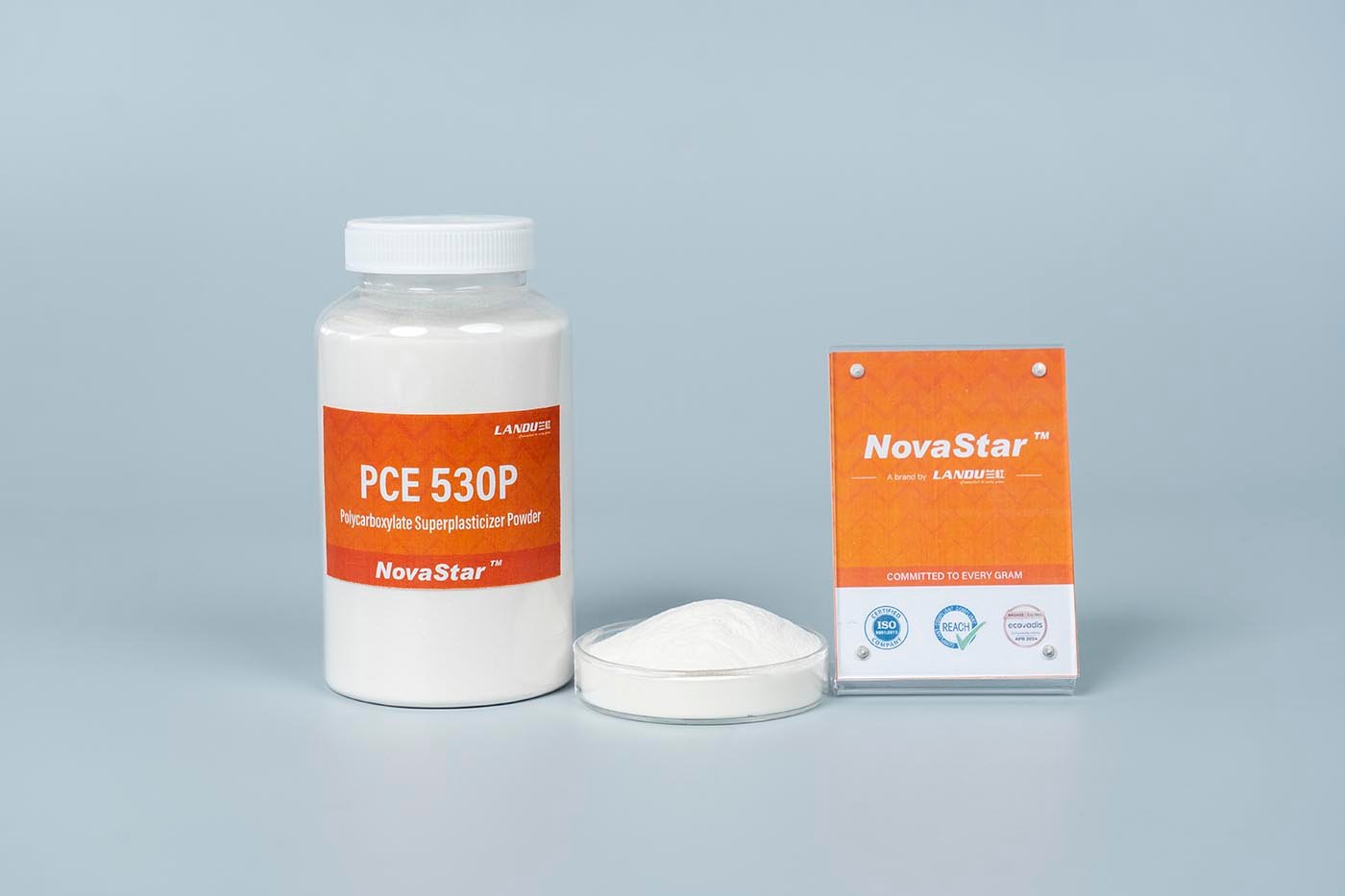
What a PCE Superplasticizer Does in a Mineral Binder Mix
The function of PCE is to modify particle dispersion and water demand. The extent of this effect depends on its molecular design and the mineral system, not simply on the label “superplasticizer.”
Water-Demand Reduction
In a compatible binder system, dispersion may allow a lower mixing-water level while reaching the specified flow. Confirm by comparing against an untreated reference mix.
Particle Dispersion
Adsorbed PCE chains help separate flocculated mineral particles. The effect depends on polymer architecture and cement or gypsum surface chemistry.
Flowability & Placement
Selected grades can assist fluidity in grouts, self-leveling mortars and concrete. Workability retention is a distinct grade- and mix-dependent property.
Binder-Specific Screening
Different mineral systems respond differently to PCE. Grade selection must account for binder chemistry, fines, temperature and other additives.
How PCE Works: Adsorption and Steric Stabilization
Many PCE superplasticizers have a comb-like molecular structure. Functional groups on the polymer backbone interact with suitable mineral surfaces, while solvated side chains form a steric barrier that reduces particle re-flocculation. Better dispersion can release water previously trapped in agglomerates and modify the fresh mix's apparent flow.
The actual response depends on sulfate balance, gypsum type, calcium availability, clay-bearing fines, supplementary powders, polymer structure and mixing conditions. Initial flow and flow retention must be tested separately.
Technical Information & Product Forms
The figures below reproduce the grouped reference values on LANDU's current PCE portfolio page. They are not a formal specification for each individual grade. Use the approved grade-specific TDS and its stated test conditions for purchasing decisions.
| Property | Published portfolio reference |
|---|---|
| Material family | Polycarboxylate-based superplasticizer |
| Grade series | 530P, 540P, 570P, 580P, 590P / 590F, 600P / 600F |
| Appearance | 530P–580P: powder; 590P/F: powder / flaky crystal; 600P/F: not specified in current family table |
| Bulk density | 600 ± 100 g/L (grouped reference) |
| Active component | ≥90% (grouped reference; analytical definition not given) |
| Water content | ≤3% (grouped reference) |
| Water reduction ratio | ≥25% (grouped reference; test mix and dosage not stated) |
| Recommended dosage | Not uniformly specified across the original portfolio table; request current grade TDS |
Choose an Initial PCE Grade by Binder and Performance Target
Start with the mineral binder, intended application and target fresh-state behavior. The cards summarize LANDU's currently published grade positioning—not universal recommendations or validated equivalence between products.
Portland Cement (OPC)
Powder PCE candidate for Portland-cement dry mixes, including grouting, bedding and selected cementitious mortar systems.
Sulphoaluminate Cement (CSA)
Grade promoted for fast-reacting CSA systems, particularly rapid-repair mortars where working time is sensitive to cement chemistry.
Gypsum-Based Binders
Gypsum-oriented powder dispersant for self-leveling materials and gypsum mortars; raw material source can strongly affect results.
High-Performance Mineral Systems
Portfolio screening option for flow-demanding grout, cementitious self-leveling and highly filled UHPC mixes.
Concrete-Oriented Grades
LANDU lists this pair for ordinary concrete and selected high-performance formulations; the precise grade-specific function needs confirmation.
Concrete-Oriented Grades
LANDU lists this pair for ordinary concrete and certain demanding mixes. Establish its specific performance target before selecting.
Application-to-Grade Screening Matrix
| Target application | 530P | 540P | 570P | 580P | 590P/F | 600P/F |
|---|---|---|---|---|---|---|
| Grouting & bedding mortar | Primary | — | — | Primary | — | — |
| Fast repair / CSA-rich | — | Primary | — | Secondary | — | — |
| Gypsum-based materials | — | — | Primary | Primary | — | — |
| Cement-based self-leveling | — | Primary* | — | Primary | — | — |
| UHPC / highly filled mixes | — | — | — | Primary | Secondary | Secondary |
| Ordinary concrete | — | — | — | — | Primary | Primary |
Polycarboxylate Superplasticizer Applications
Select PCE by binder chemistry and required flow behavior. These six applications summarize potential starting grades; final suitability should be checked in the complete mix.

Self-Leveling Compounds
PCE supports powder dispersion and target flow at controlled water content. Check spread, leveling, segregation and air release.
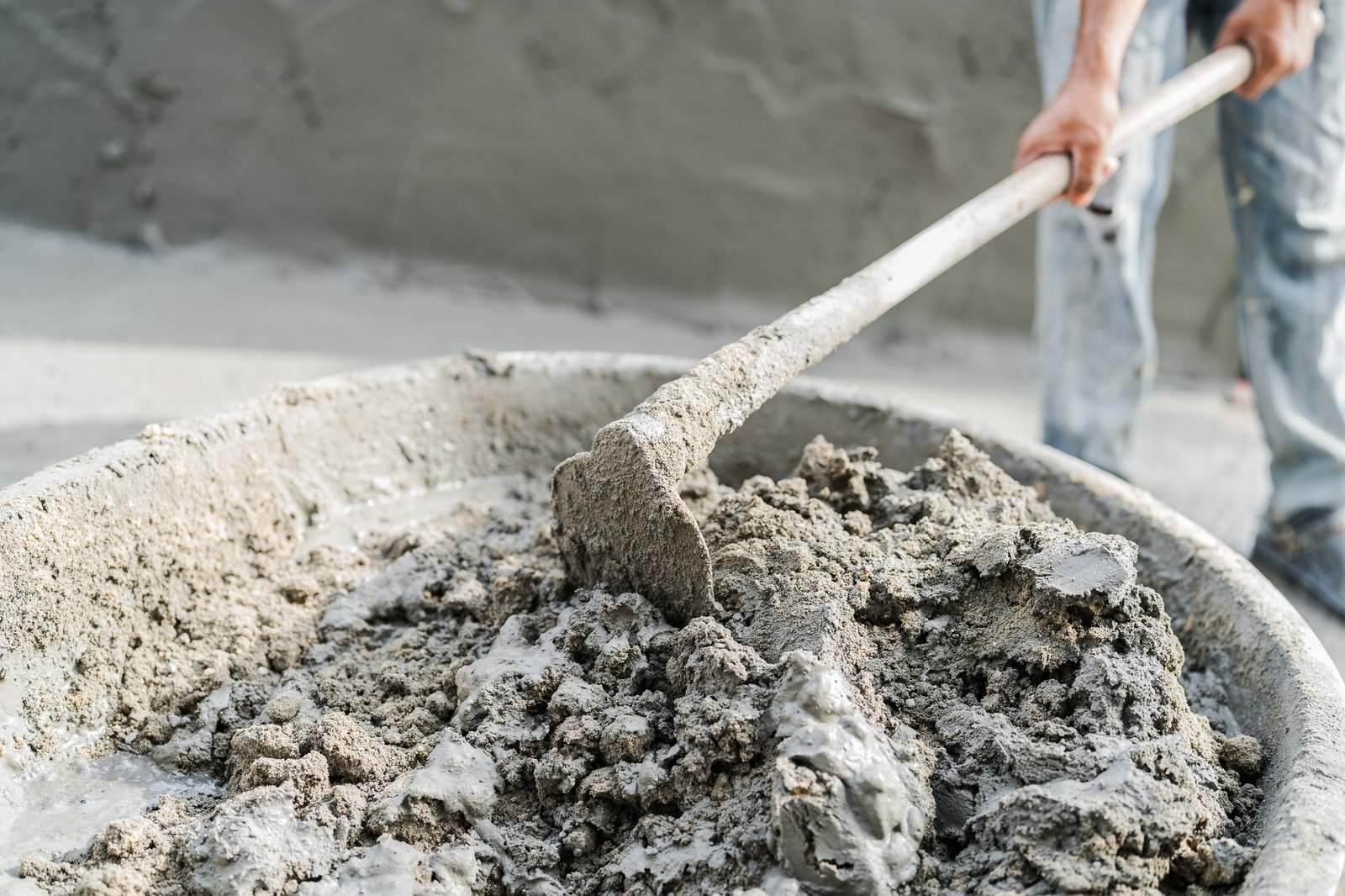
Grouting & Bedding Mortars
530P or 580P may be screened for grout fluidity. Validate bleeding, settlement and dimensional change in the finished formulation.
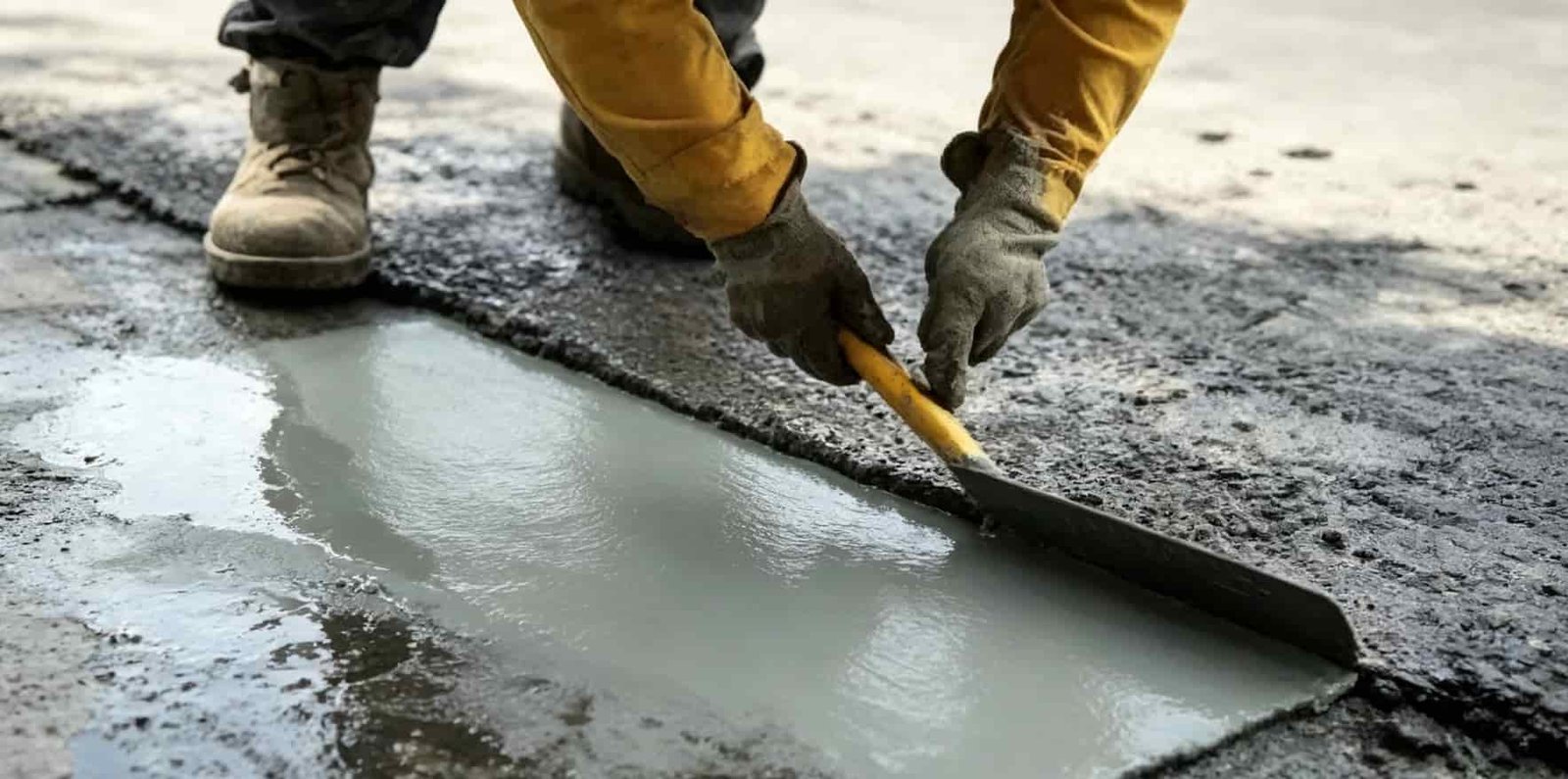
Rapid Repair & CSA Mortar
540P is an initial candidate for CSA formulations. Verify working time, setting and early strength with the actual binder and temperature.
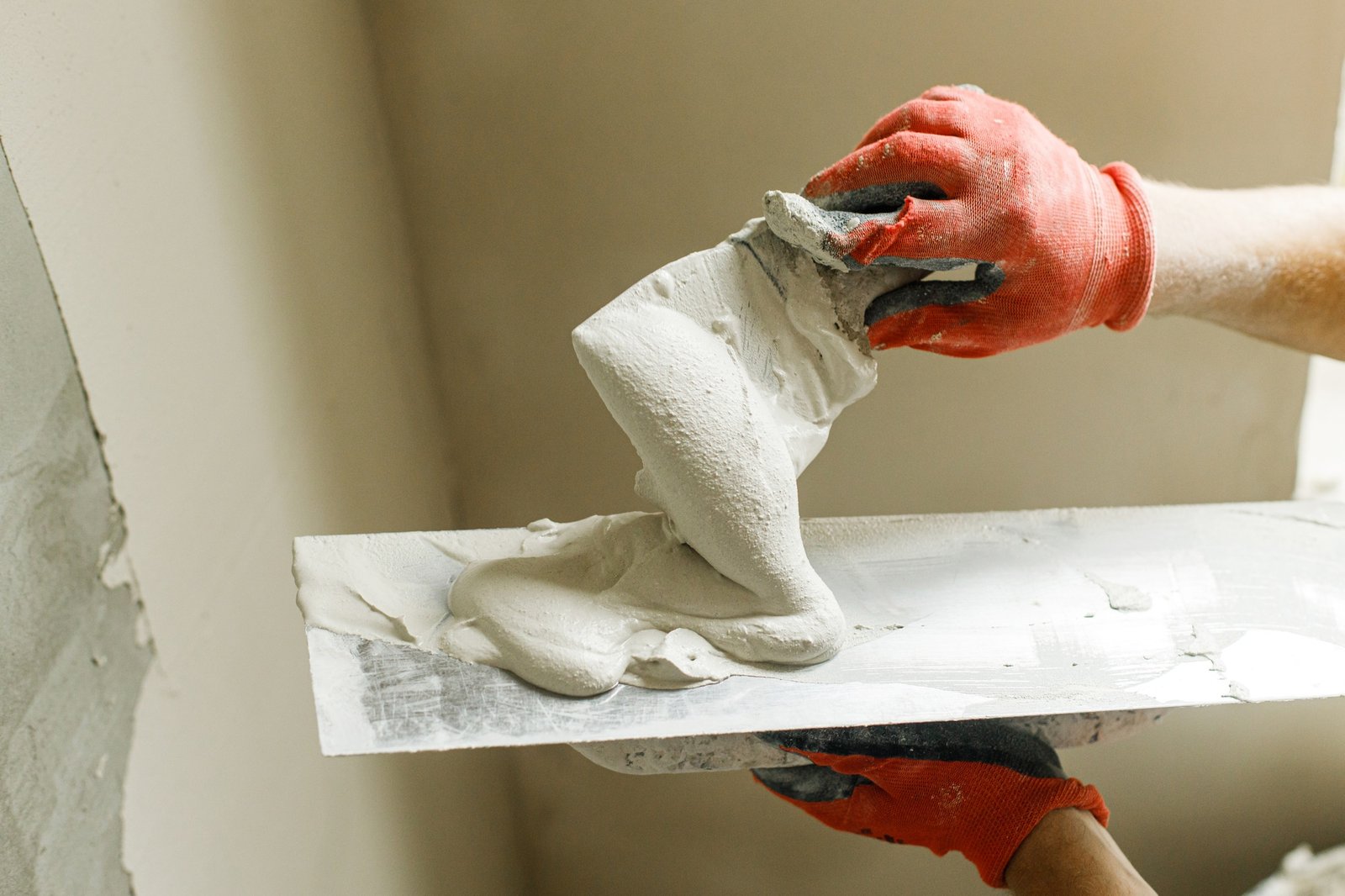
Gypsum-Based Materials
570P is designed for gypsum-system evaluation. Compare flow, water demand and setting with the local gypsum source.
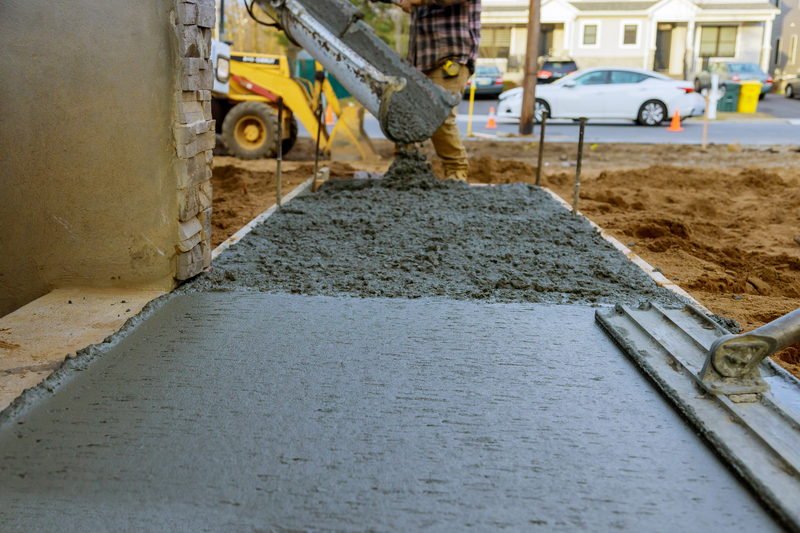
UHPC & High-Performance Mixes
580P may be screened for dense mineral blends. Assess fine-powder dispersion, viscosity, flow retention and final-mix stability.
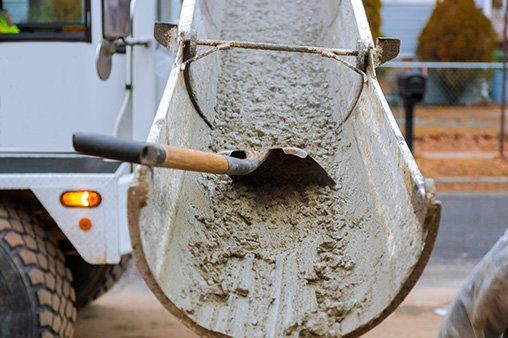
Ready-Mix & Precast Concrete
590P/F and 600P/F are concrete-oriented candidates in the current portfolio. Confirm grade form and TDS; test slump retention and segregation.
Application images illustrate relevant working environments; they are not LANDU grade-specific laboratory test evidence.
Diagnose Water-Demand, Flow-Loss and Mix-Stability Problems
PCE performance should be compared in matched reference mixes. Keep binder source, fine-powder content, grading, water ratio, temperature and mixing energy consistent while screening grades and dosage.
| Observed behavior | Possible influences | What to verify first |
|---|---|---|
| Insufficient initial flow | Grade–binder mismatch, dose below effective range, mixing or dissolution | Dosage-response curve at fixed water content; check powder dissolution |
| Fast slump / spread loss | Time-dependent adsorption, sulfate balance, clay fines, temperature | Compare initial / 15 / 30 / 60-minute flow under matched conditions |
| Bleeding or segregation | Water level, fines content, grading, admixture interaction | Reassess water-to-binder ratio, suspension stability and actual bleed |
| Unintended setting delay | Cement or gypsum chemistry, retarder/PCE interaction, mix temperature | Monitor set and early-strength development in the complete binder system |
| Excess air / pinholes | Air entrainment, powder dissolution, defoamer interaction, mixing | Record air content and surface quality with controlled defoamer trials |
| Response changes after raw-material switch | Fineness, admixture adsorption, clay minerals, sulfate or gypsum source | Re-run binder compatibility and dose-response before scaling up |
Three Practical Trial Comparisons
Compare flow with and without PCE at the same water content. Include dose, mix temperature and mixing procedure.
Determine the water level needed to reach the same target spread or slump. Record the calculation basis clearly.
Measure retained flow, bleed, air, setting time and strength as applicable to the finished product—not the additive alone.
Technical Documents, Samples & PCE Supply
Confirm product identity and suitability with grade-specific documentation and a representative trial. LANDU supplies PCE additives for use in customer-developed formulations; final approval requires testing with the intended binder and admixture package.
Technical Data Sheet
Request the current grade-specific specifications, test methods and applicable product form.
Safety & Quality Documents
Ask for the relevant SDS and available batch-specific CoA or quality records.
Packaging & Storage
Current portfolio information lists 25 kg bags and 600 kg pallets. Confirm the packing and shelf-life conditions for your selected grade.
Sample & Supply Evaluation
Share your binder, target flow, trial conditions, approximate demand and delivery country to plan the next assessment.

PCE Technical &
Purchasing FAQ
Answers to formulation decisions, documents, samples and commercial evaluation.
Which NOVASTAR™ PCE grade should I evaluate for my binder system?
For initial screening, consider 530P for ordinary Portland cement, 540P for sulphoaluminate cement and 570P for gypsum-based formulations. Assess 580P for demanding mineral systems; discuss 590P/F or 600P/F for selected concrete applications. Confirm each grade’s current TDS and run comparative trials with your actual binder.
Why does flowability drop rapidly after adding PCE?
Check cement or gypsum chemistry, sulfate balance, fine-powder content, admixture interactions, temperature and mixing sequence. Record initial and retained flow at defined intervals using the same water-to-binder ratio and dosage basis. A different PCE grade may help, but flow loss cannot be diagnosed from dosage alone.
How can I assess bleeding, air content and setting when changing PCE grades?
Compare trial mixes at a consistent target flow or water content, and measure bleeding, segregation, air content, setting time and the properties required for the finished product. Review interactions with powder defoamer, cellulose ether and other admixtures where used. PCE alone does not guarantee zero bleeding or a particular strength class.
Can LANDU provide a grade-specific TDS, SDS and CoA?
Request the current Technical Data Sheet and applicable Safety Data Sheet for your selected grade. Ask whether a batch-specific Certificate of Analysis can be supplied for the intended shipment. Confirm the measurement methods and reporting basis before comparing data across suppliers.
How do I request PCE samples for a formulation trial?
Provide the binder type, end application, current admixture, target flow or water reduction, mixing conditions and any observed issue. LANDU can then discuss candidate grades and sample availability. Verify each sample in your complete mix before approving it for production.
What packaging, minimum order quantity and delivery details should I confirm?
The current PCE portfolio page lists 25 kg bags and 600 kg pallet options for powder products; confirm the arrangement for your selected grade. Include your destination country, estimated order volume and delivery requirements when requesting a quotation. MOQ, lead time, terms and available packaging should be confirmed with LANDU sales.
Find the Right NOVASTAR™ PCE Grade
Tell LANDU what you produce, which binder you use and which property you need to improve—initial flow, water demand, retained workability, setting balance or mixture stability. Request a current TDS, evaluation sample or commercial quotation.
Recommended inquiry details: binder type and source · product application · target flow / retention · current admixture · trial and purchasing quantity · destination country.