
Tile Adhesive
LANDU supplies tile adhesive additives, including HPMC, HEMC/MHEC, VAE RDP and HPS, for dry-mix mortar manufacturers evaluating open time, workability, slip resistance and adhesion-related performance.
Tile Adhesive Applications by Tile Type & Installation
Among tile adhesive raw materials, cement, aggregates and functional additives serve different roles. LANDU focuses on cellulose ethers, redispersible polymer powders and starch ethers for application-specific formulation screening. Explore the scenarios below to identify performance priorities and candidate additives.
BY TILE TYPE
Tile size, water absorption and bond-related demands

Large-Format Tiles & Sintered Stone Slabs
Large-format tiles and sintered stone slabs create demanding installation conditions due to their size, weight, often low water absorption and the importance of adequate adhesive contact. Vertical installation may also require careful slip control.
Evaluate tensile adhesion, slip resistance, open time and transverse deformation where specified. Consider tile-back characteristics, adhesive coverage, substrate stability and installation methods.
Low-Absorption Porcelain Tiles
Low-absorption porcelain provides limited water uptake at the tile interface. Bond development depends on the adhesive formulation, contact conditions, substrate characteristics and curing environment.
Evaluate initial tensile adhesion and adhesion after applicable water and heat conditioning. Maintain suitable workability and open time to support adequate adhesive contact.
BY INSTALLATION ENVIRONMENT
Moisture, temperature and service exposure
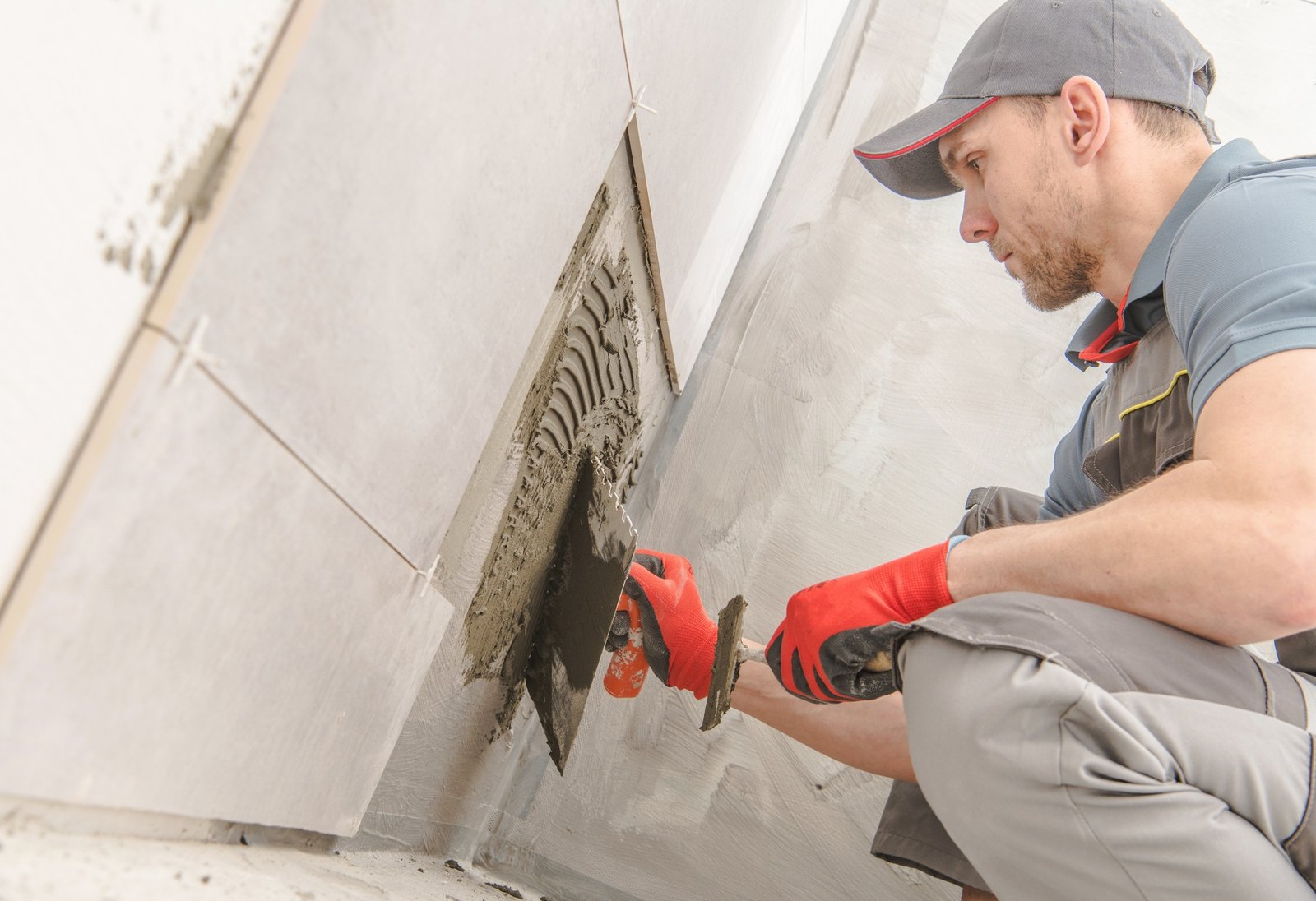
Exterior & Wet Environments
Exterior tiling and wet-service applications may face moisture, temperature fluctuations and, depending on climate, freeze–thaw conditions.
Review tensile adhesion after relevant water, heat and freeze–thaw conditioning, as applicable. Consider surface preparation and requirements of the complete installation system.
Underfloor Heating Systems
Repeated heating and cooling can create differential movement between tiles, adhesive and substrate. The degree of movement depends on installation assembly and operating temperature.
Consider tensile adhesion, transverse deformation where required, and compatibility with the specified heating assembly. Evaluate the finished system for its intended use.
BY METHOD & EFFICIENCY
Thin-bed application, renovation and faster project schedules

Thin-Bed Tile Installation
Thin-bed application requires controlled mortar consistency, stable trowel ridges, adequate water retention and sufficient working time for tile positioning.
Evaluate spreadability, water retention, open time and applicable slip resistance. Balance cellulose ether selection with the binder system and water demand.
Tile-over-Tile Renovation
Existing tile surfaces are often dense and low-porosity. Contamination, poor substrate integrity or incompatible surface treatments can adversely affect adhesion.
Assess existing tile stability, cleaning, preparation, primer compatibility where specified, and adhesion to the prepared substrate.
Fast-Track Construction
Fast-track installations may require earlier strength development or shorter setting periods while retaining sufficient time for mixing, spreading and positioning.
Evaluate setting behavior, early tensile adhesion, working time and additive compatibility with the selected rapid-setting binder system.
Technical note: These material combinations are additive-screening directions, not complete tile adhesive formulations. Finished-system performance depends on binder chemistry, aggregates, water content, substrate preparation, curing and installation conditions.
Wet-service assemblies: A separate compatible waterproofing system may be required; additive selection does not establish waterproofing performance.
Fast-setting systems: Setting behavior mainly depends on the binder and setting system. Verify HPMC, HEMC and RDP compatibility rather than assuming these additives cause rapid setting.
Common Tile Adhesive Challenges & Additive Selection
Tile adhesive problems may originate in formulation, mixing, raw material compatibility, substrate preparation or application conditions. Identify plausible causes first, then screen candidate additives under controlled comparative trials.
| Observed Problem | Potential Causes | LANDU Additive Direction | Evaluation Focus |
|---|---|---|---|
| Short Open Time | Rapid water loss, early skinning, high temperature, wind, absorbent substrate or binder conditions. | HPMCHEMC / MHEC | Open time, water retention, surface skinning and workability under representative conditions. |
| Tile Slipping | Insufficient low-shear stability, poor structural recovery or unsuitable fresh-mortar consistency. | HPSHPMC / HEMC | Slip displacement, trowelability and mortar ridge stability. |
| Weak Adhesion | Inadequate adhesive contact, contaminated surfaces, exceeded open time, polymer–binder balance, water ratio or curing. | RDPCellulose ether review | Tensile adhesion after relevant conditioning, surface preparation and contact coverage. |
| Poor Workability | Excessive thickening, inappropriate water demand, poor dispersion or ingredient incompatibility. | HPMC / HEMCHPS | Spreadability, mixing behavior, consistency and application texture. |
| Cracking During Curing | Binder shrinkage, excessive water, rapid drying, restrained movement or curing conditions. | RDPBinder / water management review | Shrinkage, curing conditions, crack development and adhesion. |
| Insufficient Deformability | Polymer characteristics, polymer-to-binder balance or unsuitable binder-system selection. | RDP | Transverse deformation, adhesion and compatibility with the target formulation. |
An observed defect may have several interacting causes. Increasing additive dosage alone is not necessarily the correct solution. In comparative trials, control binder, aggregate, water ratio, mixing procedure and curing conditions, and vary one relevant factor at a time.
Tile Adhesive Additives & LANDU Grade Selection
Compare LANDU cellulose ethers, VAE redispersible polymer powders and starch ethers for cement-based dry-mix mortar systems. Published grades support initial screening; confirm current grade-specific technical data and evaluate the finished formulation before material qualification.
| Product | Primary Technical Role | Selection Considerations | LANDU Reference | Details |
|---|---|---|---|---|
| LANDERCOLL® HPMC | Water retention, workability, fresh-mortar consistency and open-time support. | Review viscosity together with grade modification, water demand, dissolution behavior and cement compatibility. Test open time and workability with the intended mortar formulation. | Published grades · NDJ / Brookfield RV Both viscosity ranges refer to 2% solutions but different measurement methods. K75H, K100H and K150 are published tile adhesive screening references. |
|
| LANDERCOLL® HEMC / MHEC | Water management, fresh-state rheology and workable mortar consistency. | Compare HEMC and HPMC using matched binder, filler, water ratio, dosage, mixing and temperature conditions. Consider modification and grade compatibility, not only viscosity. | Published grades · NDJ / Brookfield RV Viscosities are listed for 2% solution reference methods. Confirm grade-specific modification and use suitability with the current TDS. |
|
| ACCURATE™ VAE RDP | Polymer modification, adhesion-related properties and deformability. | Select polymer characteristics according to the target adhesive classification. Compare Tg together with polymer dosage, binder compatibility, conditioned adhesion and deformation. | Published grades · Glass transition (Tg) Published VAE/PVA portfolio reference values. Tg alone is not proof of finished-mortar tensile adhesion or deformability. |
|
| NOVASTAR™ HPS | Complementary rheology modification, anti-slip and anti-sag support, and application texture control. | Screen alongside HPMC or HEMC; review low-shear stability, spreading, texture and possible changes in consistency or water demand. | Published HPS product reference Viscosity400–12,000 mPa·s · 5% aqueous solution
Moisture≤5%
Fineness<350 µm
The published HPS range is not a grade-specific specification. Request the particular model and current test conditions. |
Measurement & selection note: NDJ and Brookfield RV viscosity values are not interchangeable. Confirm solution preparation, concentration, temperature, spindle, speed and test procedure. HPMC/HEMC viscosity alone does not establish open time; VAE RDP Tg alone does not establish finished adhesive deformability or adhesion class.
Finished-Adhesive Performance Classification
For cement-based tile adhesives, EN 12004-1:2017 provides classification requirements, while EN 12004-2:2017 describes associated test methods. The following are formulation-screening considerations, not additive certifications.
| Classification | Finished-Adhesive Performance Focus | LANDU Additive Screening Consideration |
|---|---|---|
| C1 / C2 | Tensile adhesion under specified conditioning | Review RDP polymer modification and cellulose ether effects within the complete formulation. |
| T | Reduced slip | Evaluate HPS and cellulose ether rheology in the finished mortar. |
| E | Extended open time | Evaluate water retention and open-time behavior with HPMC/HEMC. |
| F | Fast-setting cementitious adhesive, including relevant early adhesion requirements | Review additive compatibility with the binder and setting system. |
| S1 / S2 | Transverse deformation classification | Review RDP characteristics and the polymer–binder balance. |
Important: Classifications apply to tested finished adhesives, not individual LANDU additives. No listed grade independently guarantees C1, C2, T, E, F, S1 or S2 performance. Consult the applicable current standard and the complete adhesive system test results.
Material Qualification Backed by LANDU Resources
LANDU supports tile adhesive manufacturers with grade-specific technical information, sample evaluation and procurement discussions covering packaging, documentation and supply requirements. Evaluate candidate materials against both formulation performance and practical sourcing needs.

Laboratory & Application Support
Review target adhesive properties, binder composition, cellulose ether selection and polymer modification. Compare candidate materials using consistent mixing, application and conditioning procedures so trial results can be interpreted reliably.
Discuss Technical Requirements ↗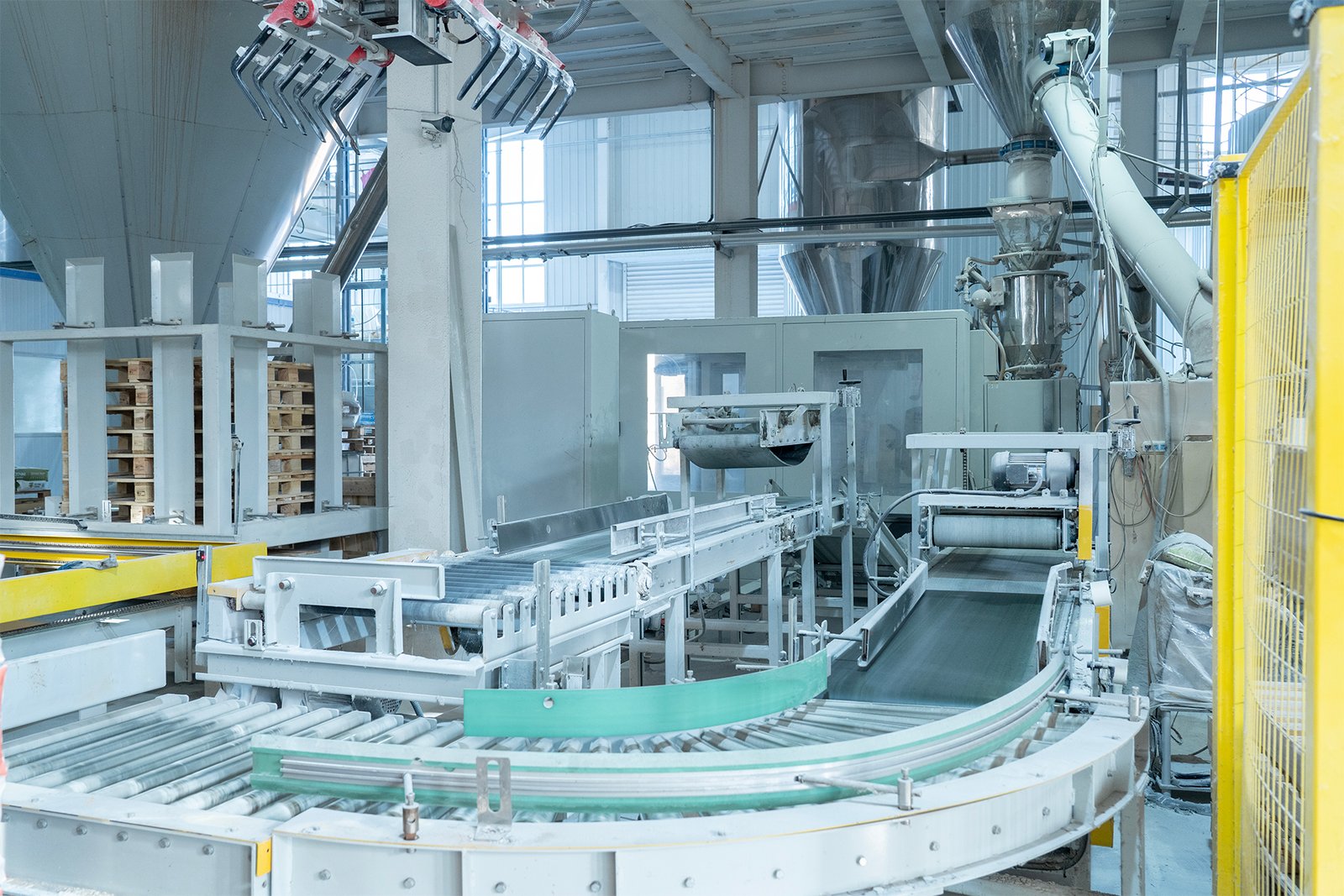
Manufacturing & Supply Support
Discuss current grade availability, technical specifications, packaging, quality documentation and order requirements. Confirm lead time and delivery arrangements for the selected grades, quantities and destinations.
Explore Manufacturing ↗Technical Evaluation & Qualification Workflow
Identify tile, substrate, exposure, intended classification and the main formulation challenge.
Compare HPMC, HEMC, RDP and HPS candidates against fresh- and hardened-state targets.
Use an agreed baseline and test open time, water retention, slip and conditioned adhesion as relevant.
Review trial outcomes, TDS, applicable quality documents and commercial requirements.
Procurement Support
Request current, grade-specific product information and applicable test conditions.
Discuss grade and sample availability, quantities and shipping arrangements.
Review applicable 25 kg bag options, MOQ, quotation quantity, destination and lead-time needs.
Request available SDS and batch-specific CoA documentation for the relevant grade.
Technical Insights for Tile Adhesive Formulators
Explore focused technical guides on open time, cellulose ether comparisons and grade selection. These resources complement the broader tile adhesive additive selection overview.
Tile Adhesive Open Time: Meaning, Testing & How to Extend It
Understand open time versus pot life, surface skinning and relevant test methods, including how raw materials and installation conditions affect performance.
Read Article →
HPMC vs HEMC (MHEC) for Tile Adhesive in Hot Weather
Compare cellulose ether selection for elevated-temperature installation, including matched-condition water retention, workability, viscosity and open-time evaluation.
Read Article →
How to Choose HPMC for Tile Adhesive
Review construction-grade HPMC selection for tile adhesive based on viscosity, water retention, dispersibility and practical application requirements.
Read Article →Tile Adhesive Additive Selection Questions
Practical answers for dry-mix mortar formulators, technical buyers and distributors.
How should I choose between HPMC and HEMC/MHEC for tile adhesive?
Compare relevant grades using the same cement, filler, water ratio, additive dosage and mixing conditions. Evaluate water retention, fresh-mortar consistency and open time under the intended environment. Grade modification and formulation compatibility matter; neither cellulose ether family is universally superior.
Which additives are commonly evaluated for large-format tile installation?
RDP, HPMC or HEMC, and HPS may be screened according to the required adhesion, open time, slip resistance and deformability. Tile-back condition, contact coverage, substrate integrity and installation procedures also affect results. The finished adhesive system must be evaluated.
Can RDP alone guarantee C2 adhesive performance?
No. C2 is a classification of the tested finished cementitious adhesive under the applicable standard. RDP can contribute to adhesion-related properties, but conformity depends on the complete formulation and required test results.
What is the role of HPS in cement-based tile adhesive?
HPS complements cellulose ether rheology when slip, sagging or application texture needs adjustment. Evaluate HPS together with the selected HPMC or HEMC grade and check its effects on mortar consistency and workability.
What information should I provide for a LANDU grade recommendation?
Provide tile and substrate types, target adhesive classification, cement and filler information, installation conditions and the main formulation problem. Where possible, include your current additive grades, dosages and relevant trial results to support an initial shortlist.
Can LANDU provide samples and grade-specific technical data for formulation trials?
Customers can request available grade-specific TDS documents and samples for initial evaluation. Identify the product or grade and intended application; sample availability, quantity and shipping arrangements should be confirmed with LANDU.
What information is required for a quotation, MOQ and lead-time confirmation?
Provide product name or grade, estimated order quantity, packaging preference, destination country and purchasing schedule. If the grade is not yet finalized, include application and technical requirements so available options can be discussed before commercial confirmation.
Find Suitable Additives for Your Tile Adhesive
Share your application, target performance and formulation challenge. Request grade-specific technical data, samples and support for controlled comparative trials.