
PCE Superplasticizer for Concrete: Water Reduction & Workability Control
For concrete manufacturers, ready-mix producers, precast plants and formulation engineers.
Compare PCE superplasticizers for concrete where water reduction, slump retention, cement compatibility and mixture stability must be controlled together. Explore LANDU NOVASTAR™ polycarboxylate admixtures for practical formulation screening.
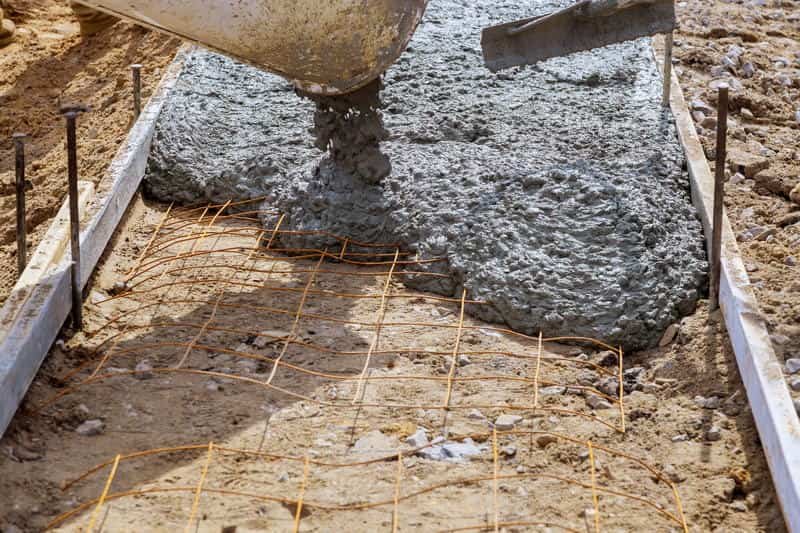
PCE Selection for Different Concrete Production Systems
Use the concrete application, binder system and placing requirements to define the admixture's role. The same PCE may behave differently when cement, fine aggregates, temperature or mixing conditions change.
Ready-Mix Concrete
Formulation challenge: Maintain practical slump from batching through transport without unplanned water addition.
- Initial slump and time-dependent slump loss
- Bleeding, cohesion and transport stability
- Cement, sand-fines and temperature sensitivity
PCE direction: Screen a water-reducing PCE and a retention-oriented candidate where the delivery period requires it. Blend proportions require trial confirmation.
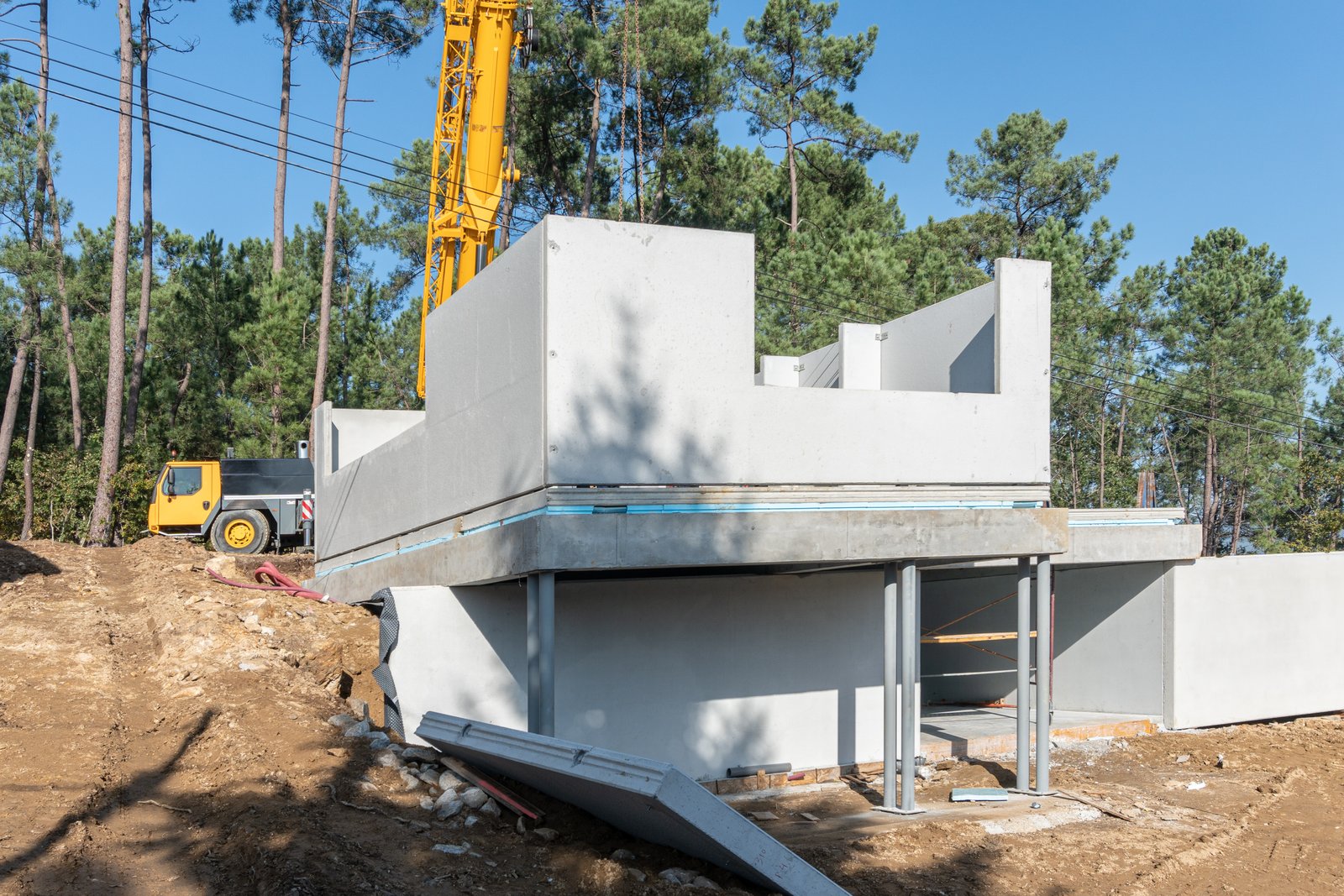
Precast Concrete
Formulation challenge: Balance dispersion, filling behavior, air and setting with early-strength requirements.
- Flow or consolidation behavior
- Setting and early-age strength
- Air content and surface finish
PCE direction: Start with a water-reducing PCE, then validate curing and early strength. High fluidity alone does not establish faster demolding.

Pumped Concrete
Formulation challenge: Maintain pumpability without excessive paste viscosity, bleeding or aggregate segregation.
- Pumpable consistency and time retention
- Mixture cohesion and aggregate grading
- Fines content and temperature variations
PCE direction: Coordinate PCE selection with paste volume, sand grading and the full rheology system.
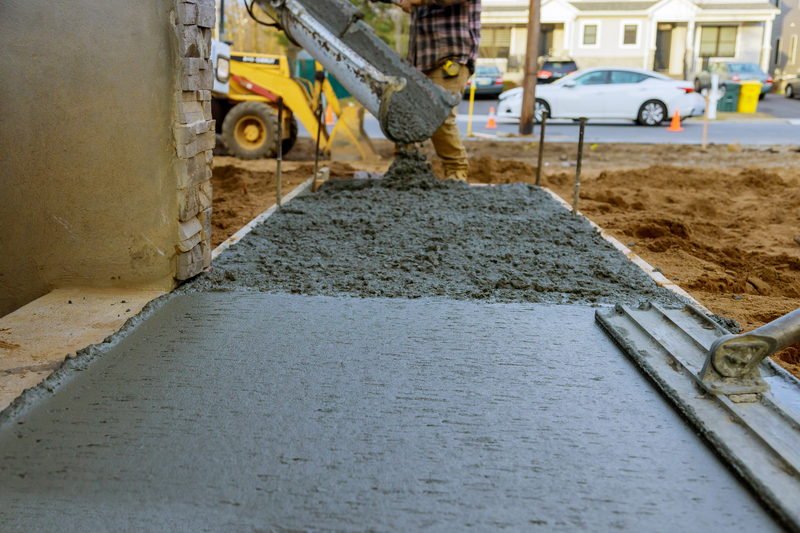
High-Strength Concrete and UHPC
Formulation challenge: Support fine-particle dispersion at low water content while maintaining suitable placement behavior.
- Flow and viscosity in the real binder system
- Silica fume and SCM compatibility
- Air content and compressive strength
PCE direction: Evaluate high-performance grades such as LANDU’s published 580P candidate; verify full-system suitability rather than assuming a strength class.

Self-Compacting Concrete
Formulation challenge: Achieve good flow and passing ability while preventing instability.
- Slump flow and flow time
- Passing ability and stability
- Cohesion and entrained air
PCE direction: Use PCE alongside appropriate paste volume and aggregate grading. A higher slump flow is not always a more stable mix.
Hot-Weather & Long-Distance Delivery
Formulation challenge: Control workability evolution across the actual delivery and placement period.
- Concrete and ambient temperature
- Slump at defined time intervals
- Setting behavior and cement source
PCE direction: Screen retention chemistry under matched temperature conditions. Grade-specific retention duration: to be verified in current TDS and trials.
How PCE Superplasticizers Affect Concrete Performance
Polycarboxylate ether (PCE) molecules adsorb onto cementitious particles. Their polymer side chains help provide steric dispersion, reducing flocculation and improving fluidity or permitting reduced water demand at a comparable consistency. Performance must be assessed in the full binder system.
Water Reduction & Flowability
At constant water content, evaluate flow improvement. At constant target consistency, evaluate water demand reduction. These comparisons answer different questions.
Slump Retention
Excellent initial dispersion does not guarantee later workability. Measure slump or slump flow at defined time points under matched temperature and material conditions.
Strength & Durability
A lower water-to-binder ratio can support strength potential, but cementitious composition, air, compaction and curing remain decisive. No grade guarantees a strength class.
Balance Dispersion, Cohesion and Pumpability
A workable concrete mix needs appropriate flow and adequate stability. PCE can change dispersion; it cannot independently correct unsuitable aggregate grading or insufficient paste volume.
Excessive fluidity can raise bleeding or segregation risk, while an overly viscous mix may resist pumping. Assess mixture stability and viscosity alongside slump.
Concrete Raw Materials and Cement Compatibility
| Mix Variable | Why It Matters | Technical Screening |
|---|---|---|
| Cement chemistry | Adsorption, sulfate balance and hydration response | Initial flow, retention, setting and cement-source sensitivity |
| Cement fineness | Changes surface area and admixture demand | Dispersion efficiency and dosage sensitivity |
| Fly ash / slag / silica fume | Changes particle packing and pore solution chemistry | Flow, viscosity, setting and hardened performance |
| Sand clay content | May compete for admixture or change water demand | Fines/clay indicators and repeatable trial mix behavior |
| Aggregate grading | Influences packing, paste demand and mixture cohesion | Bleeding, segregation and pumpability |
| Temperature and transport time | Changes slump loss and hydration rate | Time-dependent slump / slump flow and setting |
| Other admixtures | Can alter air, setting and adsorption behavior | Compatibility and sequencing tests |
Polycarboxylate Superplasticizer Grades for Concrete
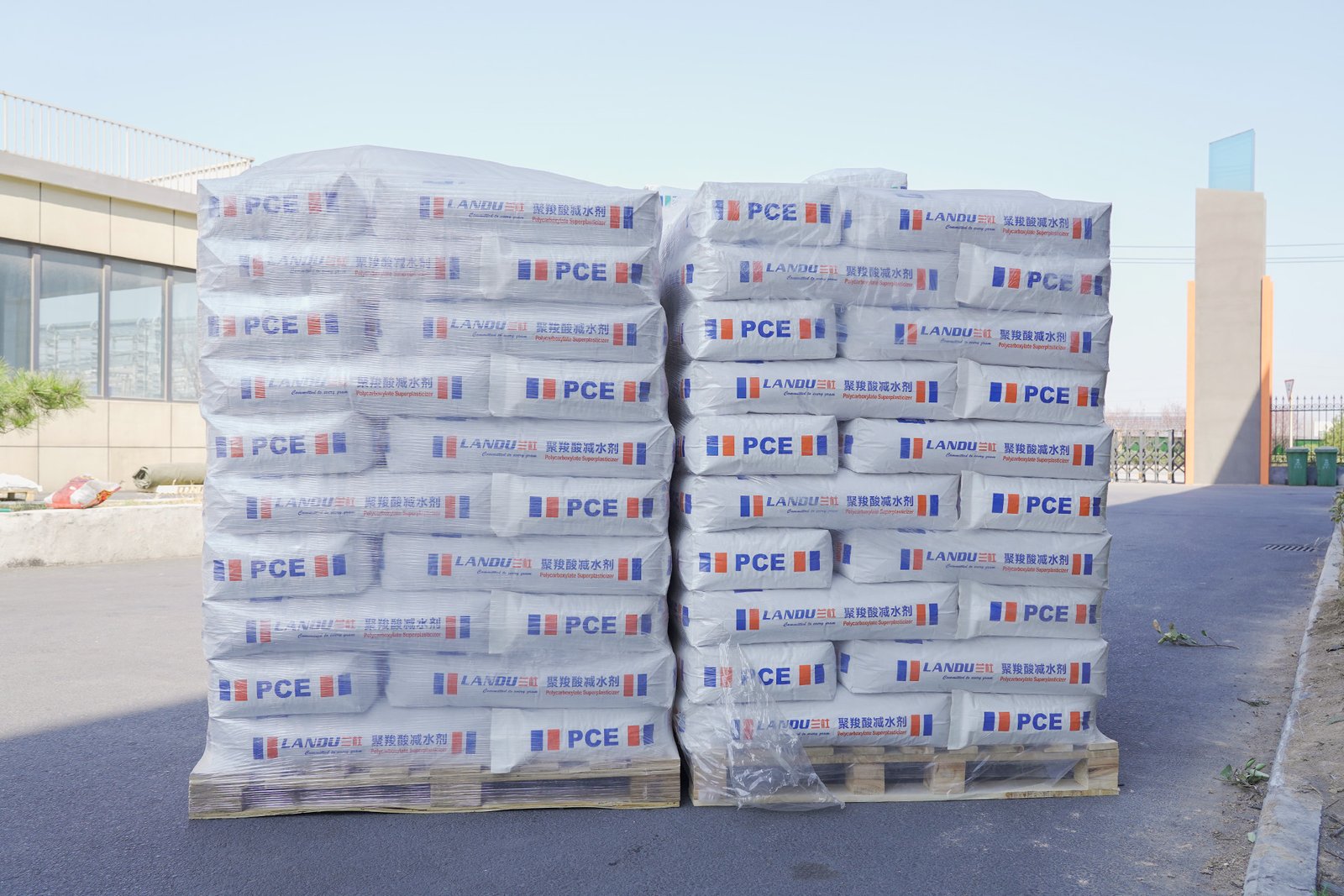
LANDU publishes solid PCE grades and product information for concrete and specialty cement systems. Liquid PCE availability and exact liquid grade codes require current product confirmation. Do not equate liquid mother liquor, formulated solution, powder and flake dosage by mass.
Water-Reducing PCE
Initial dispersionEvaluation focus: Ready-mix · precast · pumped concrete
Primary function: reduce water demand at a given consistency, or increase initial flow. Actual liquid grade and solids content must be confirmed before matching a technical data sheet.
Explore PCE product family →
Slump-Retention PCE
Workability over timeEvaluation focus: Ready-mix · hot weather · long transport
The published 600P/600F family can be evaluated as a retention-oriented candidate based on internal technical training. Grade pairing and duration remain subject to approved TDS and concrete testing.
Compare PCE materials →
Solid Water-Reducing PCE
Initial water reductionEvaluation focus: Concrete admixture formulation · solid PCE preparation
Internal technical training identifies 590P/590F as water-reducing solid-PCE candidates. Confirm current grade identity, dissolution and product-form handling before trials.
View published PCE range →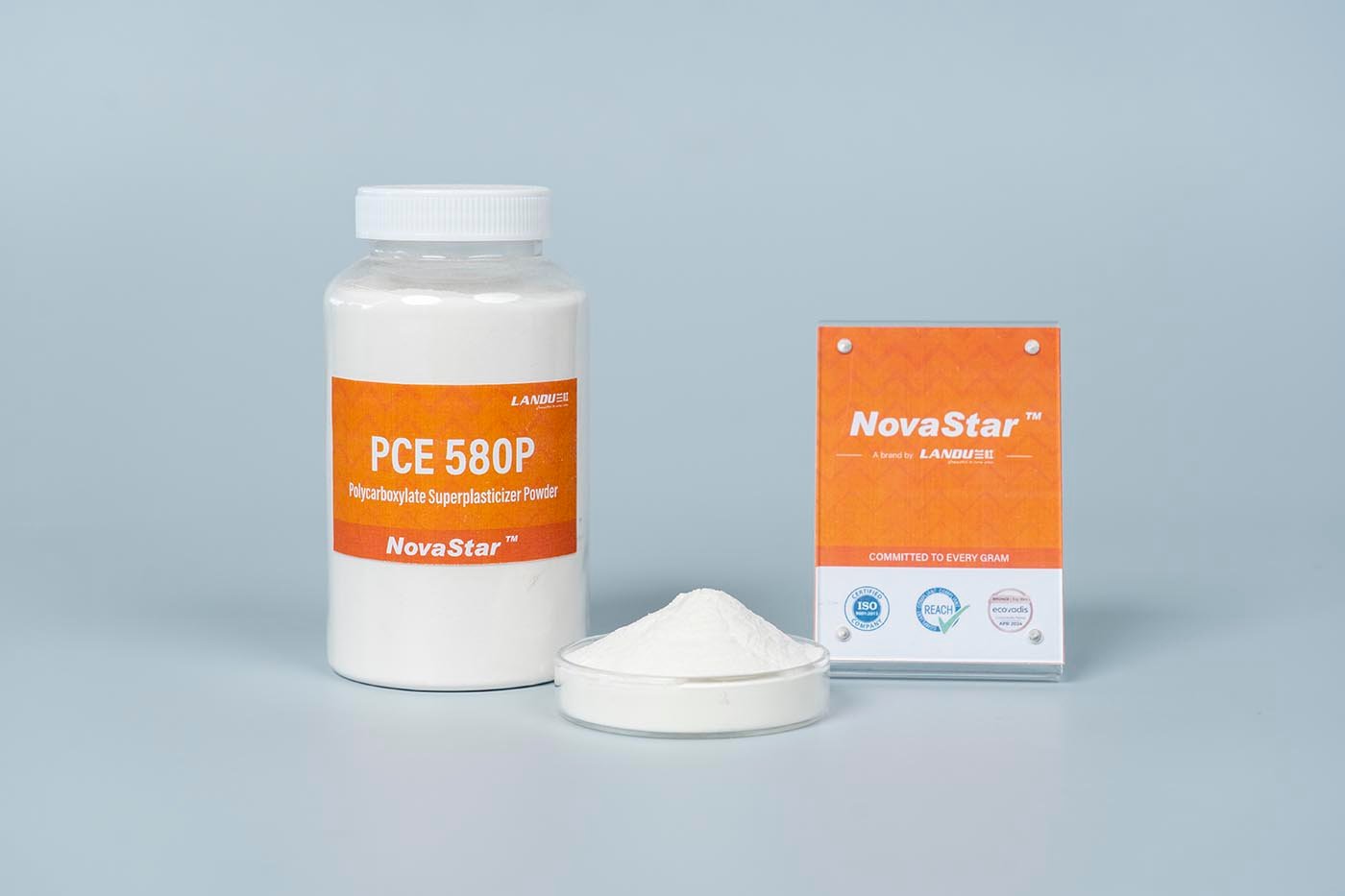
High-Performance PCE Powder
Fine binder dispersionEvaluation focus: UHPC · high-performance cementitious systems
LANDU publishes 580P for high-performance cement systems. Screen flow, viscosity, air and strength in the full UHPC or fine-particle binder formulation.
Explore 580P product page →Preliminary PCE Grade / Function Matrix
| PCE Family | Initial Screening Purpose | Verification Priority |
|---|---|---|
| Water-reducing PCE (liquid grade to verify) | Water-demand reduction / initial dispersion | Liquid concentration, initial slump, cement compatibility |
| 590P / 590F — solid forms | Solid PCE water-reduction screening | Dissolution, dose sensitivity, concrete response |
| 600P / 600F — retention screening | Workability preservation over defined delivery period | Time-dependent slump loss, setting and stability |
| 580P — high-performance powder | Fine binder dispersion in selected high-performance systems | Flow, viscosity, air and strength |
Which PCE Grade Fits Your Concrete Mix?
Send your cement composition, current admixture form, target slump, delivery time and main formulation challenge. Request grade-specific technical data before qualifying supply.
Common PCE Concrete Admixture Problems and Solutions
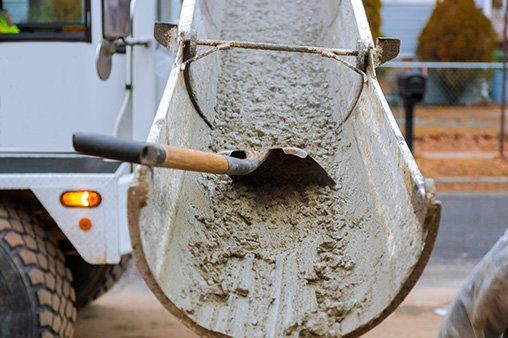
Troubleshoot the whole mix before increasing PCE dosage. A single symptom can reflect material variation, temperature, proportioning or admixture interactions.
| Observed Problem | Possible Causes | Screening Direction | Verification |
|---|---|---|---|
| Rapid slump loss | Cement interaction, heat, fines or admixture consumption | Compare PCE retention candidates and actual cement compatibility | Slump / slump flow at defined intervals |
| Low initial flow | High water demand, low dispersion, poor grading | Screen water-reducing PCE and baseline mixture | Initial slump and water-reduction trial |
| Bleeding | Over-dispersion, excess water, inadequate fines | Adjust water, grading, paste and dosage | Bleeding and fresh stability |
| Aggregate segregation | Insufficient cohesion at high flow | Review sand ratio, paste and rheology | Segregation and stability tests |
| High pumping resistance | Viscous paste, grading or low workability | Evaluate mixture rheology with PCE choice | Pumpability / relevant viscosity observations |
| Delayed setting | Cement interaction, low temperature, admixture blend | Test admixture compatibility and cement hydration response | Setting time and early strength |
| Excessive air | Mixing and admixture interactions | Review air-control system and PCE preparation | Fresh air content and density |
| Low early strength | Air, binder, water ratio or curing changes | Review full binder/admixture/curing process | Specified-age strength tests |
| Batch inconsistency | Moisture, cement, aggregates, dosing or mixing variations | Control materials and dosing sequence | Repeatability and production QC |
How to Evaluate a PCE Superplasticizer in Concrete
A sound qualification process progresses from binder screening to full concrete trials using the customer's real materials. Keep preparation method, mixing and conditioning consistent when comparing candidates.
Define the Target
Concrete application, placement, transport time and specified strength/durability.
Fix a Baseline
Use production cement, mineral additions, aggregates, water and mixing sequence.
Screen PCE Grades
Differentiate water-reducing and retention candidates; record form and concentration.
Run Paste/Mortar Checks
Use preliminary flow checks where helpful, without treating them as concrete qualification.
Conduct Concrete Trials
Measure slump evolution, stability, air, setting and relevant hardened strength.
Check Sensitivity
Repeat with realistic water, temperature, cement and fines variations.
Validate Production
Confirm batching, transport, dosage control and placement conditions.
Approve Documents
Obtain current TDS/SDS and available batch quality and procurement information.
| Test Area | Evaluation Purpose |
|---|---|
| Fresh workability | Initial slump / slump flow and time-dependent retention |
| Mixture stability | Bleeding, segregation, cohesion and air content |
| Setting | Initial / final setting as required by intended placement |
| Strength development | Early-age and 28-day compressive strength where specified |
| Mixture repeatability | Sensitivity to cement, aggregates, water and environmental conditions |
| Applicable durability tests | Only those required by the relevant project / market |


Concrete Admixture Standards and Qualification
Select the correct admixture test and conformity framework for the destination market and intended function. Product chemistry alone does not establish certification or a performance category.
| Reference | Use in PCE Evaluation | Important Limitation |
|---|---|---|
| ASTM C494/C494M-24 | Chemical admixtures for concrete, including high-range water reducers such as Type F and high-range water-reducing/retarding Type G | Requires product-specific testing and documentation for claimed type |
| EN 934-2:2009+A1:2012 | Definitions, requirements and conformity framework for concrete admixtures | Confirm the governing edition and declared product conformity |
| Project / destination-market testing standards | Fresh concrete, strength, durability and quality acceptance | Testing requirements depend on location, project and intended concrete |
Further Reading for Concrete Formulation Engineers
PCE Admixture Formulation: Flowability and Strength
Review the full relationship between admixture choice, water-to-binder ratio and concrete performance.
View technical resource →How Does a Superplasticizing Admixture Work?
Understand how dispersing admixtures affect cement flocculation and workability.
View technical resource →
PP Fibers for Concrete: Separate Crack-Control Evaluation
Fiber dispersion and crack-control targets need their own tests and must not be attributed to PCE alone.
View technical resource →FAQ: PCE Superplasticizer Selection for Concrete
What does a PCE superplasticizer do in concrete?
PCE superplasticizers help disperse cementitious particles. This may improve flow at fixed water content or reduce water demand at a specified consistency. Final results depend on the full concrete formulation.
What is the difference between water-reducing and slump-retaining PCE?
Water-reducing PCE emphasizes initial dispersion and water-demand reduction. Retention-oriented PCE is evaluated for maintaining workability over time. These functions should be compared in matched concrete trials.
Is higher PCE dosage always better?
No. Excessive dosage may produce bleeding, segregation, delayed setting or other changes depending on the cement, mix and PCE chemistry. The correct dosage must be experimentally determined.
How does PCE affect compressive strength?
PCE may enable lower water demand at the required workability and thus support a lower water-to-binder ratio. Strength also depends on the binder, air, compaction and curing; a fixed strength increase cannot be promised.
Why does slump retention change when the cement supplier changes?
Cement chemistry, sulfate balance, fineness, temperature and mineral additions can affect admixture adsorption and hydration. Re-run compatibility trials with the new cement source.
Should I choose liquid, powder or flake PCE?
Consider batching equipment, admixture preparation, storage, transport and active content. The same mass of products with different forms or concentrations is not necessarily an equivalent active dose.
Can PCE be used in UHPC or high-strength concrete?
Yes, suitable PCE candidates can be screened in these systems. Flow, viscosity, low water-to-binder ratio, air and specified strength must all be tested for the actual mix.
What should I send LANDU to request a suitable PCE grade?
Provide concrete application, cement and mineral additions, aggregate grading, target slump/slump flow, delivery time, temperature, existing admixtures, and the performance issue. Also indicate your required product form and test standard.
PCE Technical Documents, Samples and Supply Discussion
After preliminary product selection, confirm the exact grade, product form and technical and commercial details required for qualification.
Request current PCE TDS and SDS with product form and stated test methods.
Discuss candidate grades and samples for trials using your actual concrete materials.
Confirm available batch documents, declared properties and acceptance criteria.
Confirm concentration, packaging, MOQ, production lead time and destination.
Evaluate NOVASTAR™ PCE for Your Concrete Mix
Share the cementitious system, concrete production method, target slump or slump flow, delivery time and main formulation challenge. LANDU can discuss candidate grades and current technical documentation for your evaluation.
LANDU PCE information supports material screening. Finished concrete results depend on the complete mix, processing and testing conditions. Product-specific claims require current approved documentation.