
Water retention
Can reduce excessive early water loss on absorbent substrates and in thin-layer applications.
Construction-grade cellulose ether for water retention, controlled fresh-mortar consistency and practical working performance. Compare LANDERCOLL® grades for tile adhesive, wall putty, gypsum mortar and related construction applications.
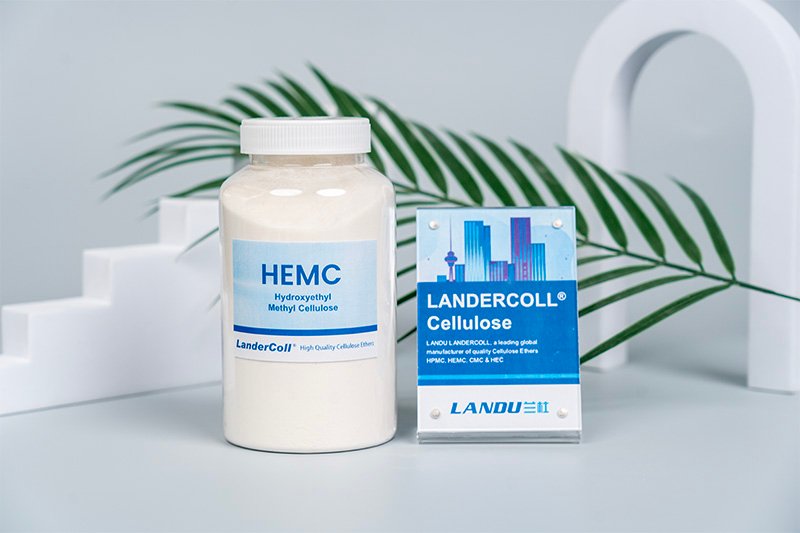
Hydroxyethyl methylcellulose (HEMC), also called methyl hydroxyethyl cellulose (MHEC), is a nonionic, water-soluble cellulose ether. It contributes to water management and rheological behavior in fresh mineral-binder systems. Its performance depends on substitution chemistry, viscosity grade, dosage and the complete mortar formulation.

After dispersion and hydration, HEMC influences the aqueous phase of the mortar and helps control water movement and consistency. It supports processing during mixing, spreading and finishing, but does not independently determine final bond strength, curing or conformity with a finished-product standard.
Can reduce excessive early water loss on absorbent substrates and in thin-layer applications.
Adjusts wet-mortar consistency; the suitable balance depends on spread and vertical stability.
Influences mixing, troweling and finishing feel in combination with other raw materials.
Water-management behavior may support application time; verify actual open time and setting separately.
Review the published MHEC grade series as an initial screening reference. Viscosity is presented separately for the NDJ and Brookfield RV methods; these numbers should not be treated as interchangeable.
| LANDERCOLL® Grade | NDJ Viscosity, 2% (mPa·s) | Brookfield RV, 2% (mPa·s) | Technical screening note | Document |
|---|---|---|---|---|
| LANDERCOLL® EM5 | 3,000–6,000 | 3,000–6,000 | Lower-viscosity screening | Request TDS ↗ |
| LANDERCOLL® EM10HT | Request current TDS | Request current TDS | Check application requirements | Request TDS ↗ |
| LANDERCOLL® EM40 | 35,000–45,000 | 20,000–24,000 | Mid-range viscosity screening | Request TDS ↗ |
| LANDERCOLL® EM40HT | 35,000–45,000 | 20,000–24,000 | Review grade-specific modification | Request TDS |
| LANDERCOLL® EM80 | 78,000–85,000 | 35,000–40,000 | Higher-viscosity screening | Request TDS |
| LANDERCOLL® EM80H | Request current TDS | Request current TDS | Verify technical specifications | Request TDS |
| LANDERCOLL® EM80G | 78,000–85,000 | 35,000–40,000 | Review gypsum-system behavior | Request TDS |
| LANDERCOLL® EM100 | 85,000–110,000 | 45,000–60,000 | General mortar evaluation | View TDS |
| LANDERCOLL® EM100H | 85,000–110,000 | 45,000–60,000 | Review grade-specific modification | Request TDS |
| LANDERCOLL® EM100G | 85,000–110,000 | 45,000–60,000 | Review gypsum-system behavior | Request TDS |
| LANDERCOLL® EM150G | 140,000–160,000 | 55,000–65,000 | Review gypsum-system behavior | Request TDS |
| LANDERCOLL® EM200 | 185,000–215,000 | 65,000–80,000 | High-viscosity screening | View TDS |
| LANDERCOLL® EM200H | 185,000–215,000 | 65,000–80,000 | Review grade-specific modification | Request TDS |
The grade matrix above reflects publicly available LANDU reference information, not a batch-specific release specification. Some grades require confirmation using the current approved TDS before technical comparison. To compare NDJ and Brookfield results meaningfully, check test temperature, solution preparation, instrument, spindle and rotational speed. Grade suffixes are supplier-specific, not a universal industry classification.
| Appearance | White or off-white powder |
|---|---|
| Moisture | ≤ 6% |
| Residue on ignition | ≤ 5% |
| pH | 6.0–8.0 |
| Particle size | 100% pass 80 mesh |
| NDJ viscosity (2%, 20°C) | 85,000–110,000 mPa·s |
| Brookfield RV (2%, 20°C) | 45,000–60,000 mPa·s |
EM100 values are published on LANDU's HEMC application pages and should not be generalized to every EM-series grade.
The site media library currently provides grade TDS files for EM100 and EM200. Other grades should be checked with the technical sales team.
The same chemical family may require different processing characteristics from one binder system to another. Use these scenarios to define what you need to test; final grade selection should follow formulation trials.

HEMC contributes to water management and fresh-mortar consistency when the adhesive is combed, adjusted and left exposed before tile placement. Open time and slip need to be evaluated separately in the finished formulation.
Evaluate: workable open time · slip · trowelabilityRead application guidance
Water retention and controlled viscosity help achieve spreading and finishing consistency, but excess structure may increase tool drag. Compare substrates and local water demand during trials.
Evaluate: spreading · surface finish · water demandRead application guidance
For gypsum systems, water demand, dissolution profile and interactions with gypsum retarders can influence working consistency. HEMC is not a replacement for a dedicated set-control additive.
Evaluate: wet consistency · setting profile · finishRead application guidance
Adhesive mortars and reinforced base coats present different placement requirements. Grade selection should consider water retention, application rheology and interaction with polymers and fillers.
Evaluate: board adhesive behavior · base-coat trowelingRead application guidance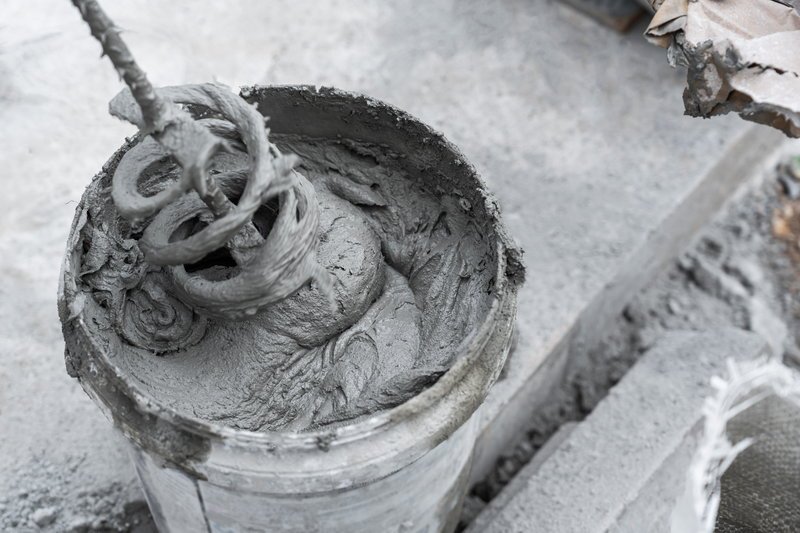
Manual and machine-applied renders need different balances of mix consistency, pumpability, vertical stability and surface finishing. The complete binder and aggregate system governs performance.
Evaluate: spray/hand application · sag · finishRead application guidance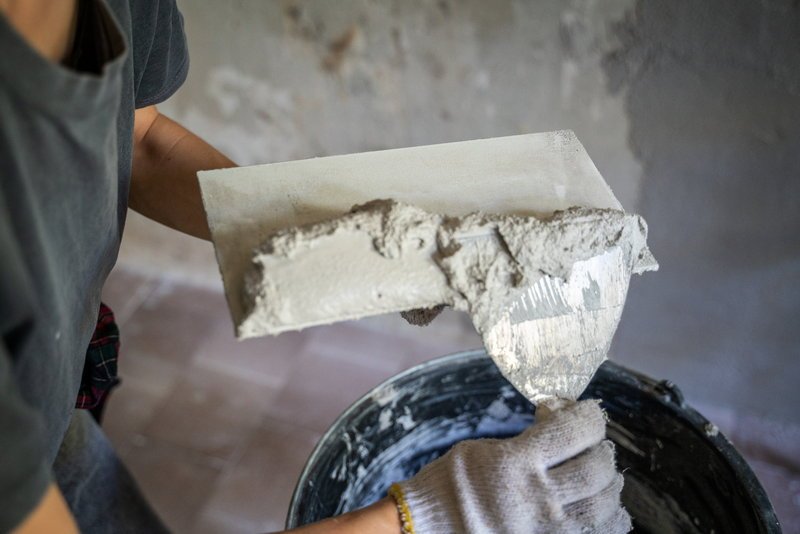
In repair and waterproofing mortar, consistent application on absorbent or vertical substrates matters. Assess HEMC alongside the binder, redispersible polymer powder and other specialty additives.
Evaluate: substrate suction · working time · placementRead application guidanceBegin with the finished application and measurable performance requirements. A solution-viscosity value is useful for comparing material candidates only when test conditions are equivalent.
Identify cement or gypsum chemistry, aggregate grading, substrate suction, climate and mixing/application process.
Separate water-retention problems from trowel drag, tile slip, air entrainment, short working time or poor finishing.
Measure relevant mortar properties such as open time, consistency, slip, set profile, water retention and finished-material performance.
Verify grade chemistry and technical conditions using current TDS files; then run side-by-side trials in your complete formulation.
| Tile adhesive | Prioritize workable open time, trowelability and vertical slip as separate targets. |
|---|---|
| Wall putty | Balance water demand, spreading consistency, tackiness and final surface finish. |
| Gypsum mortar | Check dissolution, water retention and compatibility with gypsum-specific set control. |
| EIFS / ETICS | Distinguish adhesive and base-coat mortar requirements; verify the full insulation-system mix. |
| Render & repair | Evaluate application thickness, hand/machine processing and substrate absorption. |
HEMC vs HPMC: Compare representative grades under the same binder, dosage and test procedure. General claims about one chemistry being “better in hot weather” or “always having longer open time” are not a substitute for test results.
Request grade screening supportThese diagnostic checks help pinpoint formulation variables before a grade change. They do not constitute a finished formulation or a guaranteed result.
Check substrate absorption, cement setting, air movement and mixing water. Then compare HEMC water-management behavior and actual open-time measurements.
Review water demand, fine fillers, HEMC dosage and interactions with other rheology modifiers. Higher 2% viscosity alone may increase drag.
Evaluate yield stress, mortar recovery after troweling, aggregate design and the contribution of starch ether or other modifiers in addition to HEMC.
Check dry-blend homogeneity, water addition sequence, hydration time and whether the grade has special dissolution characteristics.
Compare gypsum source, temperature, water ratio and retarder dosage separately from cellulose ether thickening and water-retention functions.
Request current TDS/CoA documentation and evaluate application performance, not just nominal viscosity: substitution and modification can differ between grades.
A practical material choice starts with documents and ends with a repeatable trial. LANDU supports inquiries for construction-grade cellulose ethers and related additives; request documents for the exact grade, destination market and intended use.
Confirm solution test conditions, key specification fields and grade identification.
Run matched trials on your binder and filler package before production-scale evaluation.
Discuss sample size, packaging, batch documents, required quantity and delivery destination.
Straight answers to common selection and purchasing questions.
No. Hydroxyethyl methylcellulose (HEMC) and methyl hydroxyethyl cellulose (MHEC) are alternative names used for the same general type of nonionic cellulose ether. Grade-specific chemical substitution and performance should still be verified in the supplier’s documentation.
Both are nonionic, water-soluble cellulose ethers used to modify fresh-mortar rheology and water retention. HEMC contains hydroxyethyl and methyl substituents, while HPMC contains hydroxypropyl and methyl substituents. Actual thermal response, dissolution and construction performance depend on substitution levels and each commercial grade, not simply the abbreviated name.
No. A 2% solution viscosity is one screening parameter; open time also depends on cement chemistry, water content, polymer modification, substrate absorption and environmental exposure. Compare finished-mortar performance under matched conditions.
No. Finished tile-adhesive classification depends on the tested formulation and all of its components. A cellulose ether by itself does not establish conformity with a finished-product classification.
Keep instrument, spindle, rotation speed, temperature and solution preparation consistent. The two published columns are different test-method readings and should not be assumed interchangeable.
Share the application, binder type, grade or viscosity target, current problem, testing conditions, estimated demand and destination market. Ask for the current grade-specific TDS, sample availability and any relevant documentation.
Tell our team your end application, binder system, current problems, required technical documents and estimated demand. Request EM100 or EM200 TDS, ask for another grade's specification, or start a sample evaluation.
Please share your formulation type and a target grade if known.