
Gypsum Additives for Plaster, Self-Leveling & Board Production
Setting Control · Foam Management · Water Retention
LANDU supplies gypsum retarders, powder defoamers and HPMC/HEMC cellulose ethers for gypsum plaster, self-leveling compounds and selected gypsum board or block processes. Select the additive package for your gypsum source, production method and target performance.

Gypsum Plaster Additives for Setting Time and Water Retention
For hand-applied and machine-applied gypsum plaster, the main task is to preserve workable time without compromising hardening, water retention or surface finish.

But achieving consistent performance in gypsum plaster can be challenging. Common issues include:
- Premature SettingMaterial stiffens before spreading or finishing is complete.
- Cracking, Debonding & PowderingSurface defects may appear after application and drying.
- Rapid Water LossAbsorbent substrates can draw water out of the plaster too quickly.
- Trowel Drag or Poor Sag ResistanceThe mix may scrape heavily or fail to hold on vertical surfaces.
- Inconsistent Working TimeDifferent gypsum batches may produce unstable application windows.
Gypsum Retarder
Adjusts the setting window. Assess initial and final set alongside workable time and hardened strength.
HPMC / HEMC
Supports water retention and application consistency; compare trowel drag, sag resistance and pumping behavior.
Powder Defoamer
Evaluate where spray application or finish requirements reveal undesirable entrained air or surface defects.
Gypsum Self-Leveling Additives for Flow Stability and Surface Quality
A calcium sulfate self-leveling mix needs enough flow to spread, enough stability to resist separation, and an appropriate setting profile.

Achieving flow stability and smooth surface quality in gypsum self-leveling compounds requires controlling several issues:
- Rapid Flow LossFlowability may drop too quickly during mixing, pumping or placement.
- Pinholes, Bubbles & Poor Surface AppearanceEntrained air and weak air release can lead to visible defects.
- Bleeding & Aggregate SettlementInsufficient cohesion can cause separation and uneven hardened surfaces.
- Poor LevelingExcess viscosity or premature stiffening can restrict spreading.
- Inconsistent Surface StrengthSurface performance may vary after hardening when the system is not uniform.
Powder Defoamer
Helps control unwanted entrained air and surface pinholes; verify flow and wet density.
HPMC / HEMC
Suitable grades can support suspension stability. Excessive viscosity may restrict leveling and spreading.
PCE 570P
A compatible PCE can support particle dispersion and initial flow; assess segregation and water demand.
Gypsum Retarder
Adjusts the setting window when required. Test flow retention separately from initial and final setting.
Gypsum Board and Block Additives for Production Cycle Control
Gypsum board and block production both require predictable hydration, but the equipment, forming process and setting targets are not identical.

Maintaining production-cycle consistency depends on gypsum reactivity, forming conditions and these common issues:
- Cycle MismatchSetting time does not fit the mixing, forming or handling schedule.
- Inconsistent Forming or DemoldingProcess stability may suffer when slurry behavior changes during production.
- Insufficient Green StrengthEarly-stage strength may be too low at the required handling point.
- Surface-Quality VariationBoard or block surfaces may become inconsistent between runs.
- Raw-Material VariationChanges in gypsum source can alter setting behavior and line response.
Gypsum Retarder
Can extend mixing and forming time when the line requires a longer window; verify early-stage strength.
Powder Defoamer
Evaluate unwanted air-related surface defects; do not remove intentionally introduced foam in lightweight boards.
HPMC / HEMC
Consider water management and fresh-mix consistency only when the process calls for them.
Some production lines require faster setting rather than retardation. LANDU primarily supplies setting-delay products; acceleration is a separate formulation strategy.
Choose Gypsum Additives by Application — Not by a Universal Recipe
Use the target product and performance issue to shortlist materials. The recommended combination and testing depend on the gypsum source and process.
| Application | Main Material Direction | Optional Screening | Verify |
|---|---|---|---|
| Hand-Applied Plaster | Gypsum retarder + HPMC / HEMC | Powder defoamer | Workable time, water retention, finishing |
| Machine-Applied Plaster | Retarder + pump-compatible cellulose ether | Defoamer / rheology adjustment | Pumpability, wall hold-up, set |
| Gypsum Self-Leveling | Compatible dispersant, rheology and air management | Retarder + PCE where needed | Flow, suspension, air release, set |
| Gypsum Board | Production-specific setting control | Optional air / consistency adjustment | Line-speed fit, green strength |
| Gypsum Block | Setting and forming-cycle control | Defoamer or cellulose ether if justified | Demolding, strength, surface |
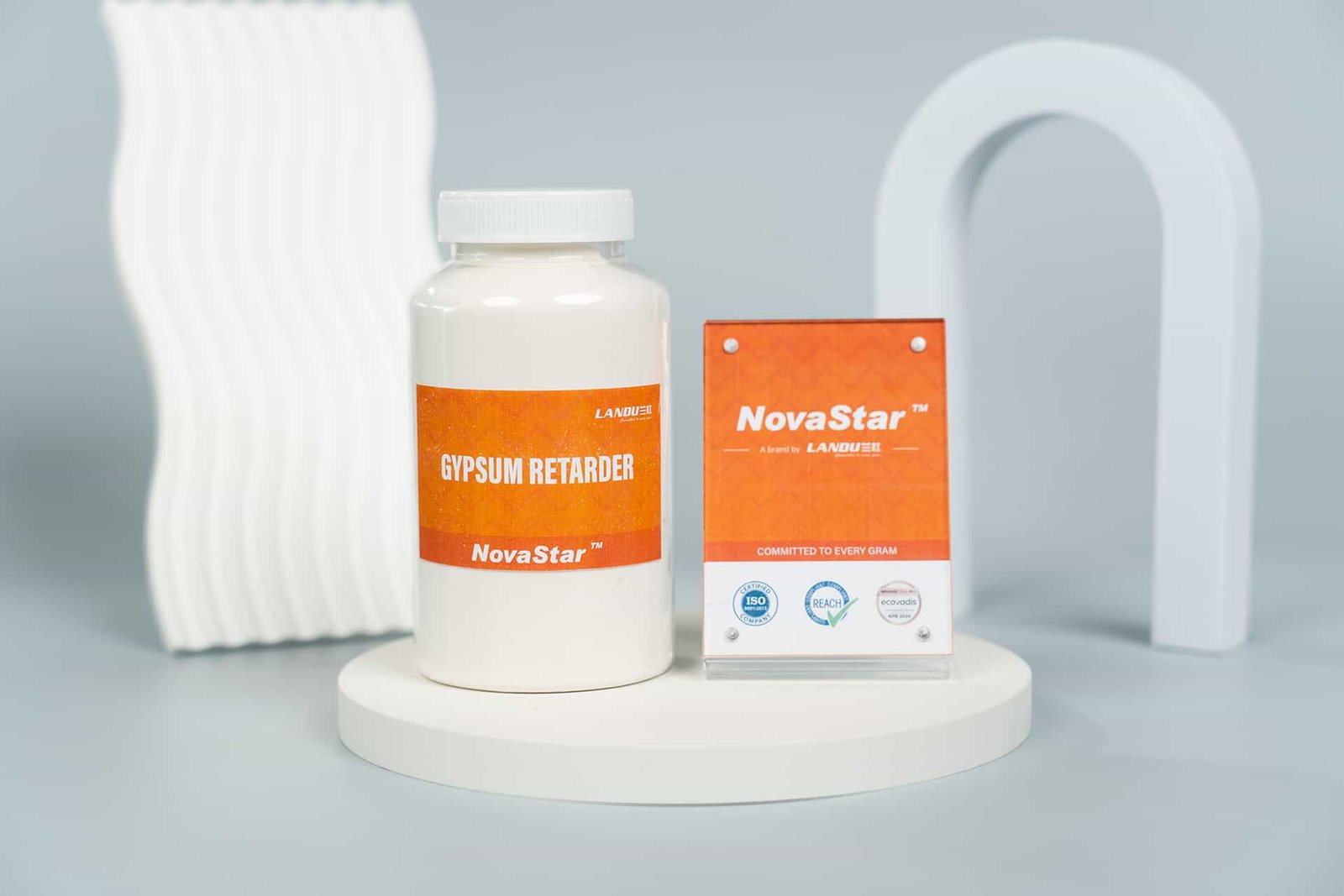
Gypsum Retarder
Setting-delay candidate for compatible gypsum plaster and other suitable systems.
View retarder details →
HPMC
Water retention and wet-mix consistency for selected gypsum plaster formulations.
View HPMC grades →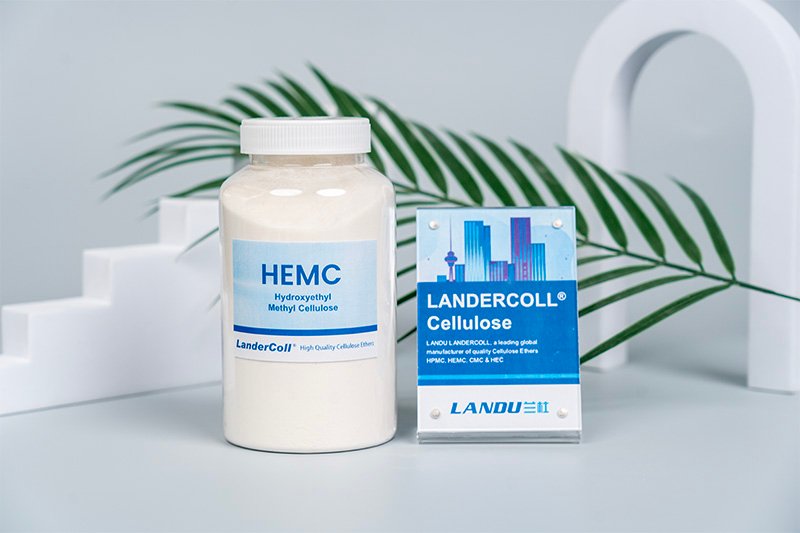
HEMC / MHEC
Alternative water-retaining cellulose ether for matched formulation trials.
View HEMC grades →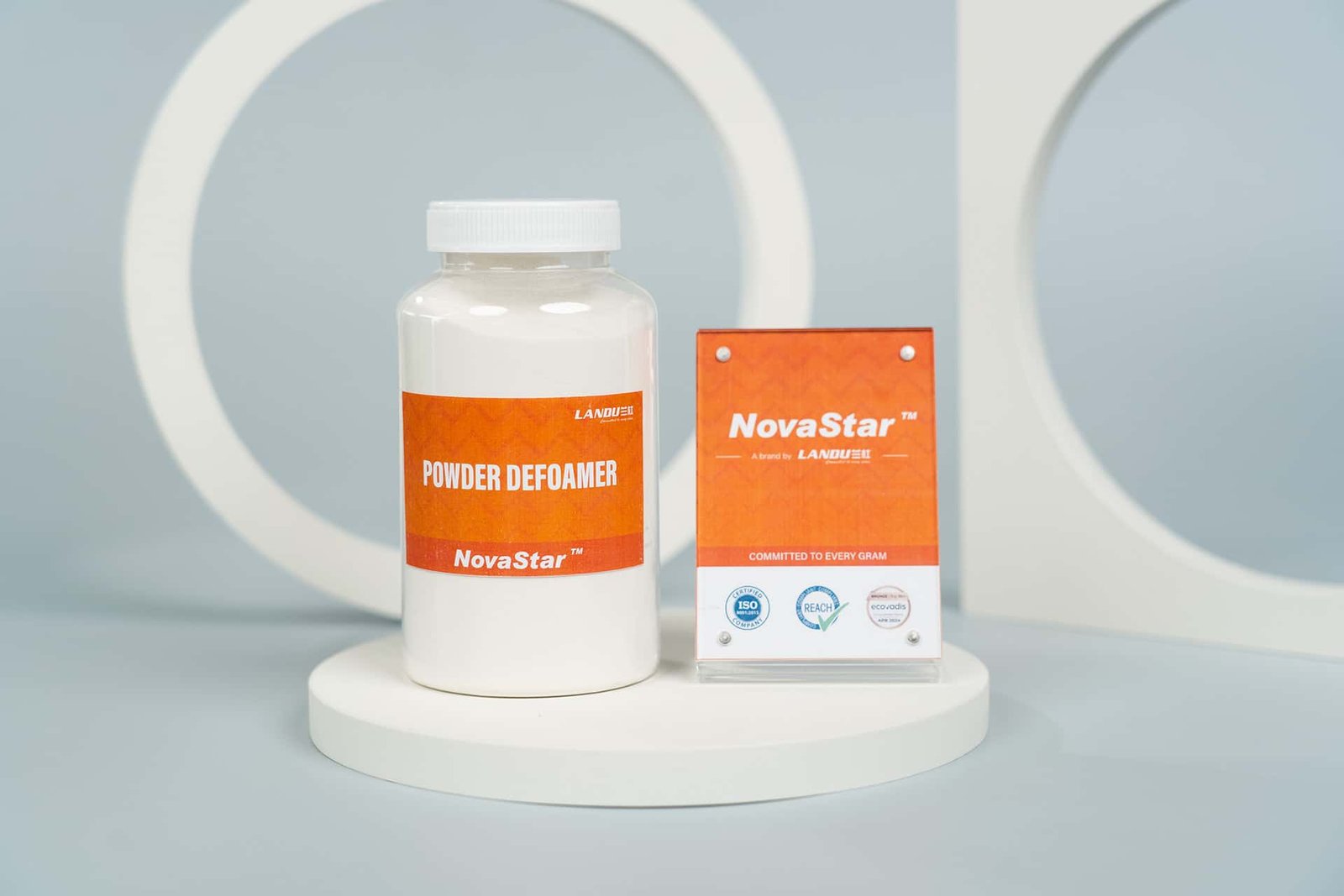
Powder Defoamer
Screening for unwanted air and pinholes in compatible gypsum products.
View defoamer →
PCE
Dispersant candidate for selected gypsum flowable systems. Confirm current grade data before selection.
View gypsum PCE →Gypsum Retarder Comparison and Formulation Testing
Measure performance in your actual gypsum system. Natural, FGD and phosphogypsum can have different water demands, impurities and setting responses.
Amino-Acid-Based vs. Citric Acid Gypsum Retarders
Both can delay gypsum setting, but efficiency, dosage sensitivity and hardened-strength response depend on the chemistry and formulation.
| Evaluation | Amino-Acid-Based Retarder | Citric Acid |
|---|---|---|
| Setting control | Depends on the specific amino acid or formulated product | Often effective at relatively low addition |
| Dose response | Establish grade-specific setting curve | Small dose changes may strongly affect setting |
| Strength retention | Some formulations may balance delay and strength | Excess addition may reduce hardened strength |
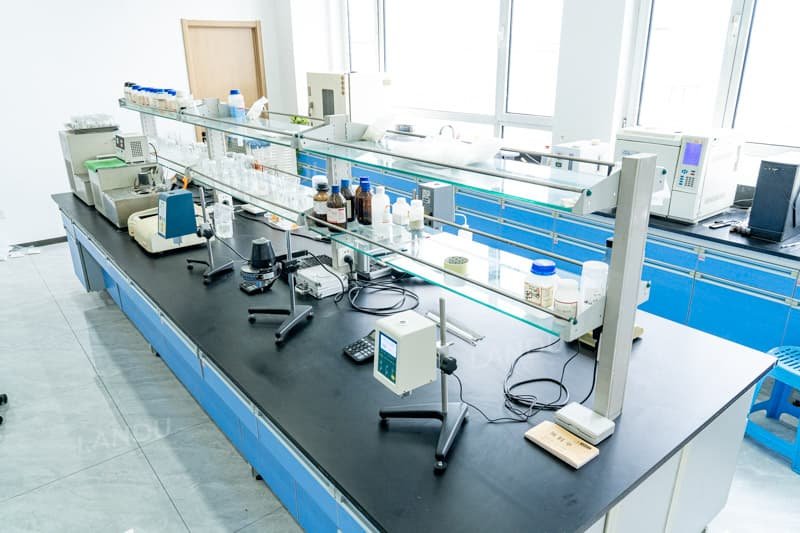
Recommended Gypsum Trial Record
| What to Record | Why It Matters | Suggested Test Output |
|---|---|---|
| Gypsum source and batch | Raw-material variation affects additive response | Natural / FGD / phosphogypsum, supply batch |
| Binder and water demand | Changes setting and fresh consistency | Mixture composition and water basis |
| Retarder and cellulose ether | Additives interact within the complete system | Grade, dosage and dosage basis |
| Setting and working time | Factory cycle or application window | Initial/final set; observed practical usability |
| Flow, retention or sag | Depends on finished application | Flow retention / wall hold-up / pumpability |
| Air and hardened properties | Surface quality and product qualification | Pinholes, density, adhesion or strength |
Technical Documents and Additive Qualification
Request current grade-specific information and evaluate the material against the applicable requirements for gypsum plaster, screed, board or block.
What Gypsum Manufacturers Can Request
- Current TDS and SDS for candidate additive grades
- Sample availability for formulation screening
- Discussion of retarder and cellulose ether compatibility
- Review of key trial variables and testing conditions
- Available quality and commercial-supply documentation
Frequently Asked Gypsum Formulation Questions
Does every gypsum formulation need a retarder, defoamer and cellulose ether?
No. Gypsum plaster commonly prioritizes setting control and water retention; gypsum self-leveling may require closer attention to flow, air release and suspension. Select additives for the observed problem.
How is gypsum retarder dosage determined?
Run a dose-response trial with the actual gypsum source, water demand, temperature and required setting window. Check hardened strength at the selected setting time.
Can a gypsum retarder maintain self-leveling flow?
A retarder may delay chemical setting, but it does not necessarily prevent rheological flow loss. Measure flow retention and PCE compatibility separately.
When should powder defoamer be used in gypsum materials?
Evaluate it when undesirable air produces pinholes or other surface defects. Do not remove intentional foam in products where low density depends on controlled air.
Does a gypsum board production line always need a retarder?
No. The required setting profile depends on line speed, forming and handling. Some processes require acceleration rather than retardation.
What information should we send for a gypsum additive recommendation?
Send the gypsum source and batch, finished product, existing additives, water demand, current/target setting times, key defect and production conditions. Include sample and procurement requirements.
Discuss Your Gypsum Formulation with LANDU
Share your gypsum source, product type, current setting profile and main performance challenge. Request candidate additives, grade-specific TDS and samples for your own trials.
Include: gypsum source · application · water demand · current/target setting · main problem · destination market.