
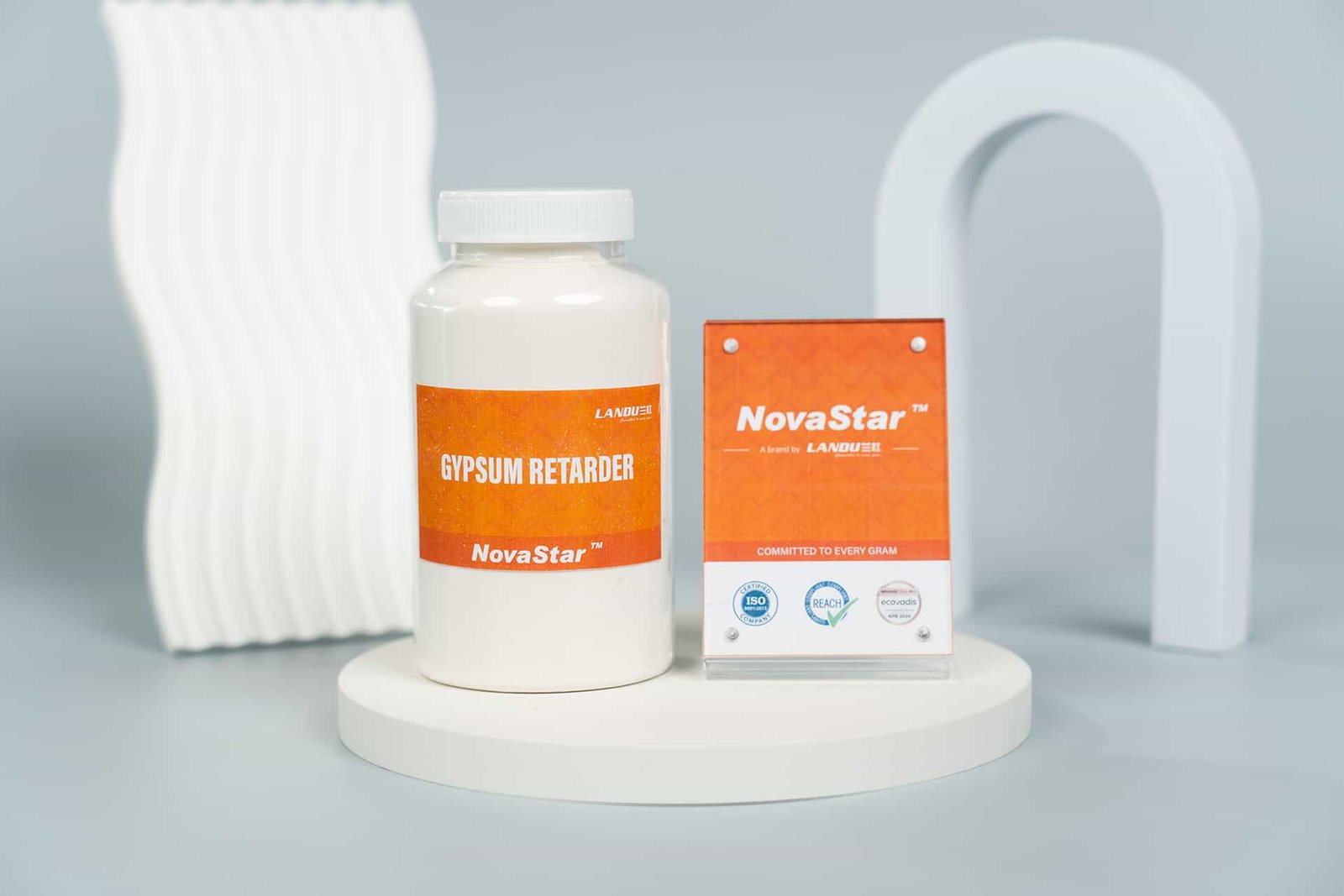
Short answer: A gypsum retarder is an additive that slows the setting of calcium sulfate hemihydrate (stucco or plaster of Paris) so that gypsum plaster, putty, self-leveling compound or joint filler stays workable long enough to mix, apply and finish. Without a retarder, many gypsum binders begin to set within minutes. Retarders work by delaying the dissolution of hemihydrate and the growth of gypsum (dihydrate) crystals. The main types are organic acids and their salts, phosphates, and protein-based retarders. The right dosage is usually a small fraction of a percent of the binder, set by trial for each gypsum source, because too much retarder weakens and softens the hardened plaster.
Why Gypsum Plaster Needs a Retarder
Gypsum binders are made by heating natural or synthetic gypsum (calcium sulfate dihydrate) to drive off part of its water, producing hemihydrate. When the hemihydrate is mixed with water again, it dissolves and recrystallizes as dihydrate. The interlocking crystals give the hardened plaster its strength.
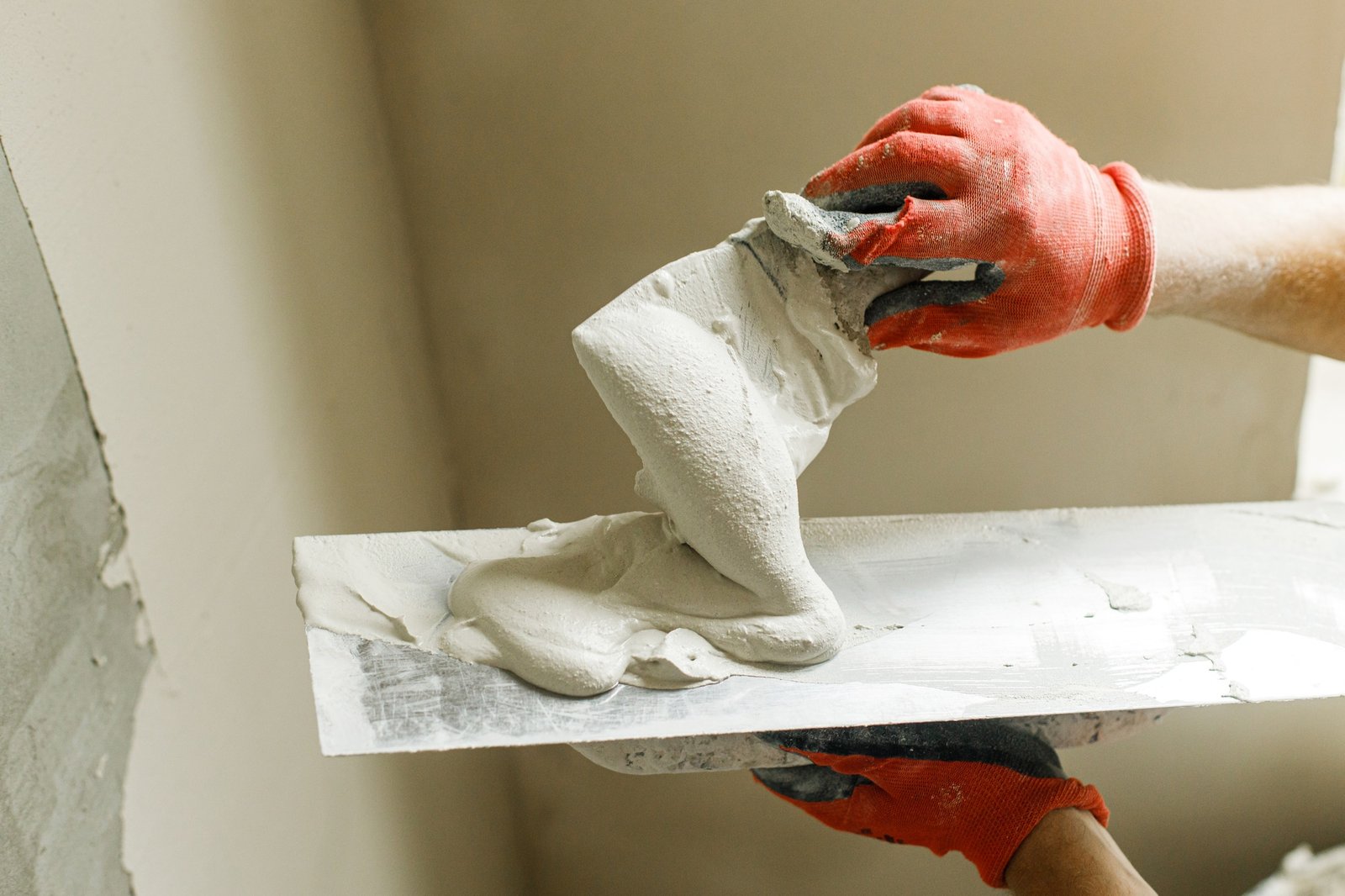
This reaction is fast. The setting time depends on the gypsum source and calcination, on impurities, on water temperature and on the mixing method. A plaster that sets too quickly causes real problems on site:
- The mixed batch hardens in the bucket before it can be used.
- Applicators cannot level, smooth or finish the surface.
- Machine-applied plaster can block hoses and pumps.
- Re-tempering setting plaster with extra water weakens it.
A retarder gives the formulator control over open time (how long the material stays workable) and setting time, so the product suits hand or machine application.
How Gypsum Retarders Work
Retarders delay one or more stages of the hydration process:
- Slowing dissolution. Some retarders adsorb onto hemihydrate particles or form complexes with calcium ions, reducing how quickly calcium sulfate goes into solution.
- Delaying nucleation. Retarders make it harder for the first dihydrate crystal nuclei to form, which extends the induction period before setting begins.
- Modifying crystal growth. Adsorbing onto growing crystal faces changes the size and shape of gypsum crystals. A moderate effect is harmless, but too strong an effect produces weaker crystal interlocking and softer plaster.
This third mechanism is why retarder choice and dosage matter: the aim is a longer working window with the smallest possible loss of hardness and strength.
Types of Gypsum Retarder
| Type | Examples | Typical characteristics | Points to watch |
|---|---|---|---|
| Organic acids and salts | Citric acid, sodium citrate, tartaric acid, malic acid and their salts | Strong retarding effect at low dosage, readily available, low cost | Sensitive to dosage; overdosing can noticeably reduce strength and surface hardness |
| Phosphates | Sodium polyphosphates, sodium hexametaphosphate | Effective in some gypsum types | Effect varies with gypsum source and pH |
| Protein-based retarders | Hydrolyzed proteins, amino-acid-based products | Long, stable retardation; generally smaller strength loss than simple acids | Higher cost per kg; check odor and storage stability |
| Blended or modified retarders | Formulated products combining several actives | Designed for a balance of working time and strength in a specific binder | Compare on performance in your own gypsum, not on name |
No single type is best for every binder. Natural gypsum, flue-gas desulfurization (FGD) gypsum and phosphogypsum can respond very differently to the same retarder, so testing with your actual binder is essential.
Where Gypsum Retarders Are Used
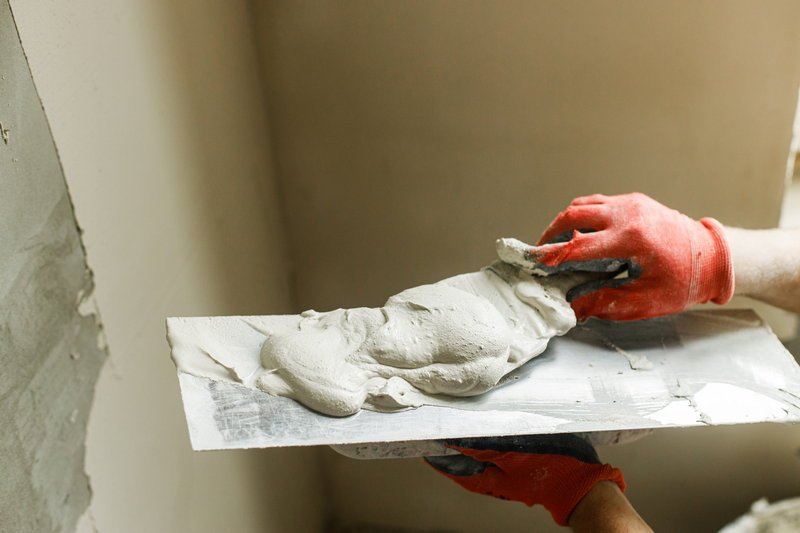
- Hand-applied gypsum plaster, where a longer open time lets applicators spread and finish large areas.
- Machine-sprayed gypsum plaster, which needs a predictable, longer working window to avoid hose blockage.
- Gypsum putty and skim coat, where smooth finishing matters.
- Gypsum self-leveling compounds, which must flow and self-heal before setting.
- Joint fillers and jointing compounds for plasterboard.
- Gypsum board and block production, where the set must be timed to the production line.

See how retarders fit with other additives on our gypsum additives page and our dry-mix mortar additives overview.
How to Set the Dosage
Retarder dosage is normally expressed as a percentage of the gypsum binder weight and is usually a small fraction of a percent. The exact figure depends on the retarder type and strength, the gypsum source, the target setting time, and the other additives in the mix. Use the supplier's TDS as a starting range, then find your optimum by trial:

- Define the target. For example, the initial and final setting times you need for hand or machine application.
- Measure the unretarded binder. Record its setting time with your normal water–plaster ratio and water temperature.
- Test a dosage ladder. Try three to five dosage levels around the supplier's recommended start point.
- Measure setting time with a standard method. EN 13279-2 (test methods for gypsum binders and plasters) describes the knife method and the Vicat cone method; ASTM C472 covers physical test methods for gypsum materials.
- Measure hardened properties. Check flexural and compressive strength and surface hardness at each dosage, not only setting time.
- Choose the lowest dosage that meets the working-time target. This keeps strength loss to a minimum.
- Recheck when anything changes, including a new gypsum batch, a new supplier or a seasonal change in water temperature.
How Retarders Interact with Other Additives
A gypsum formulation is a system, and the retarder rarely works alone:
- Cellulose ethers (HPMC, MHEC). These control water retention and workability. They can slightly influence setting and will change how the plaster feels during the working window. Use grades suited to gypsum, such as LANDERCOLL® HPMC G grades.
- PCE superplasticizers. Gypsum-specific PCE such as 570P reduces water demand. Lower water content can shorten setting time, so the retarder dosage may need adjusting.
- Lime and pH. Many retarders are pH-sensitive. Adding hydrated lime or changing the gypsum source can strengthen or weaken the retarding effect.
- Accelerators. Finely ground gypsum (dihydrate seed) or potassium sulfate are sometimes used to sharpen the set after a long open time. Balance them against the retarder.
- Defoamers. Air entrained during mixing can mask strength loss. A powder defoamer helps keep the comparison fair.
Troubleshooting Setting Problems
| Symptom | Possible causes | What to try |
|---|---|---|
| Plaster sets too fast | Retarder underdosed, warm mixing water, contaminated mixer with set plaster, very reactive gypsum batch | Increase retarder in small steps; use cooler water; clean mixer; test the new gypsum batch |
| Plaster does not harden or stays soft | Retarder overdosed, wrong retarder type for the gypsum, high pH | Reduce dosage; trial a protein-based or blended retarder; check lime content |
| Low strength or dusty surface | Too much retarder affecting crystal growth, high water–plaster ratio | Use the lowest effective dosage; reduce water with a gypsum PCE |
| Setting time varies batch to batch | Variable gypsum source, poor dispersion of a small-dose additive, storage moisture | Pre-blend retarder with a carrier; test each incoming gypsum lot; store dry |
| Short working time with a machine | Heat build-up in the pump, insufficient retarder for the cycle time | Increase retarder for machine grades; check water temperature and pump cleaning |
LANDU Gypsum Retarders
LANDU supplies two NOVASTAR™ gypsum retarder grades for calcium sulfate hemihydrate binders. Both are dry-mix additive powders, added by uniform dry blending and supplied in 25 kg bags.
| NOVASTAR™ P300 | NOVASTAR™ P400 | |
|---|---|---|
| Main applications | Hand- and machine-applied gypsum plaster, gypsum putty, setting-type jointing compounds | Gypsum-based self-leveling underlayments and other flowable gypsum mixes |
| Processing goal | Enough time for spreading, filling and finishing | Enough time for mixing, pumping, spreading and leveling |
| What to measure in trials | Working time, initial and final set, finishing quality, early hardening | Flow retention, segregation resistance, initial and final set, strength |
These application areas are screening directions, not a fixed ranking of retarding strength. The right grade and dosage depend on your gypsum source, water–binder ratio, temperature and co-additives, so confirm them in trials. Specifications such as appearance, moisture, density and recommended dosage are given in each grade's current Technical Data Sheet. When you compare dosages, state whether the percentage refers to gypsum binder mass or total dry-mix mass.
For best results, we evaluate the retarder together with your gypsum binder, cellulose ether and PCE, so that working time, flow and strength are balanced in one formulation. See the gypsum retarder product page for specifications, or send us your gypsum type and target setting time for a starting recommendation, TDS and samples.
FAQs
What is a gypsum retarder?
A gypsum retarder is an additive that slows the setting of hemihydrate gypsum binders, giving gypsum plaster, putty and self-leveling compounds a longer working time before they harden.
What chemicals are used as gypsum retarders?
Common types are organic acids and their salts such as citric and tartaric acid or sodium citrate, phosphates such as sodium polyphosphates, and protein-based retarders made from hydrolyzed proteins or amino acids. Formulated blends are also widely used.
How much retarder should be added to gypsum plaster?
Retarders are usually dosed at a small fraction of a percent of the binder weight. The right amount depends on the retarder, the gypsum source and the target setting time, so start from the supplier's TDS and confirm with setting-time and strength tests.
Does a retarder reduce the strength of gypsum plaster?
It can. Retarders slow crystal growth, and too much retarder produces weaker crystal interlocking and softer plaster. Using the lowest dosage that meets the working-time target, and choosing a retarder type suited to the gypsum, keeps strength loss small.
Why does the same retarder behave differently with different gypsum?
Natural gypsum, FGD gypsum and phosphogypsum differ in impurities, particle size, pH and calcination. These factors change how fast the binder dissolves and recrystallizes, so the same retarder dose can give different setting times.
Find the Right Setting Window
Tell LANDU your gypsum source, application, current and target setting times and other additives. We will suggest a P300 / P400 screening route.
Request TDS & SamplesView Gypsum Retarder