

Short answer: Hydroxyethylcellulose (HEC) is a water-soluble, nonionic thickener made from cellulose. In hair care it is used to build viscosity in shampoos and conditioners, to form clear gels for styling products, to suspend particles and to give a smooth, non-sticky feel. Because it is nonionic, it works with anionic, amphoteric and cationic ingredients, which makes it unusually versatile across hair products. It is typically used at a few tenths of a percent to around one percent in shampoos and conditioners, and at higher levels in gels. Cosmetic safety assessments have found cellulose ethers including HEC safe as used in cosmetics, and it is generally regarded as gentle on hair and scalp.
What Is Hydroxyethylcellulose?
Hydroxyethylcellulose (INCI name: Hydroxyethylcellulose, CAS 9004-62-0) is a cellulose ether. It is produced by reacting purified cellulose with ethylene oxide, which attaches hydroxyethyl groups to the cellulose chain. The result is a polymer that dissolves in both cold and hot water and forms clear, smooth solutions.
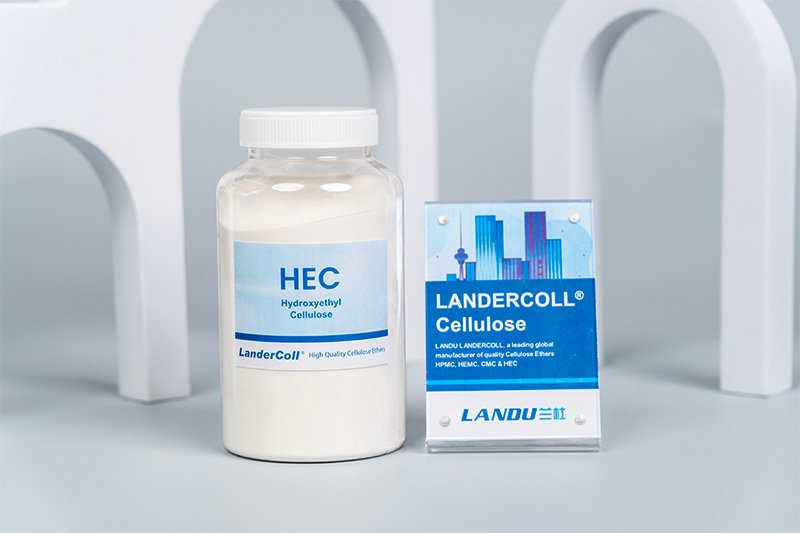
Key properties for formulators:
- Nonionic, so it is compatible with most surfactants, salts and conditioning agents.
- Pseudoplastic flow: thick at rest, thinner when poured, pumped or spread.
- Clear solutions suitable for transparent products.
- Stable over a wide pH range, commonly about pH 2–12 for the polymer itself.
- Available in many viscosity grades, from low to very high molecular weight.
For a broader overview of HEC across cosmetics, see Hydroxyethyl Cellulose in Cosmetics.
What HEC Does in Hair Products
| Function | Why it matters in hair care |
|---|---|
| Thickening | Builds the viscosity consumers expect, especially in low-salt or sulfate-free shampoos that do not thicken well with salt alone |
| Gel formation | Forms clear, smooth gels for styling products without the stickiness of some synthetic polymers |
| Suspension | Helps keep beads, pearlescent agents or botanical particles evenly distributed |
| Foam texture | Can make lather feel creamier and more stable |
| Spreadability and feel | Gives a smooth, cushioned feel during application and helps products spread evenly through hair |
| Film forming | Light film formation adds body and slip without heavy residue |
HEC in Shampoo
Many shampoos are thickened with salt, which works well with conventional sulfate surfactants. HEC becomes valuable when that approach is not enough:

- Sulfate-free and mild shampoos. Surfactants such as amino-acid-based or glucoside surfactants often respond poorly to salt. HEC provides viscosity independently of the surfactant system.
- Clear shampoos. HEC thickens without clouding the product.
- Baby and sensitive-scalp products, where formulators want a gentle, nonionic thickener.
Typical use level: HEC is commonly used at about 0.2–1.0% in shampoos, depending on the grade's viscosity and the target product viscosity. Start low with a high-viscosity grade, because HEC's thickening effect adds to the effect of the surfactant system.
Formulation tips:
- Hydrate HEC in the water phase before adding surfactants.
- Check viscosity after 24 hours, as it can continue to build.
- Combine with a small amount of salt only if your surfactant system responds to it.
HEC in Conditioner and Hair Masks
Conditioners usually rely on cationic surfactants and fatty alcohols for structure. HEC is used alongside them to:
- Adjust and stabilize viscosity without interfering with cationic conditioning agents, thanks to its nonionic nature.
- Improve spreadability through wet hair.
- Stabilize emulsions in rinse-off and leave-in conditioners.
Because HEC is not cationic, it does not compete with conditioning ingredients for deposition on the hair. For extra conditioning from the polymer itself, some formulators use cationically modified cellulose (for example Polyquaternium-10) alongside or instead of plain HEC.
HEC in Styling Gels and Leave-In Products
HEC forms clear, smooth gels that are easy to rinse out and do not flake heavily when dry. It is used in:
- Styling and curl-defining gels, often combined with film-forming fixative polymers for hold.
- Leave-in conditioners and creams, to give body and slip.
- Scalp serums and treatments, to suspend actives and control flow.
Typical use level: gels generally need more HEC than shampoos, often around 1–2% depending on the grade and the desired thickness. Because HEC is nonionic, it tolerates electrolytes and many active ingredients better than carbomer-type thickeners, which can thin out in the presence of salts.
How to Disperse HEC Without Lumps
HEC hydrates quickly. If powder is dumped into water, the outer layer of each particle swells instantly and traps dry powder inside, forming "fish eyes" that are hard to dissolve. To avoid this:
- Use a surface-treated (delayed-hydration) grade where possible. These grades disperse in neutral or slightly acidic water before they start to swell.
- Add HEC slowly to the vortex of well-agitated water at room temperature.
- Let it disperse fully, then raise the pH slightly (for example with a small amount of base) to trigger hydration of surface-treated grades.
- Alternatively, pre-wet the powder in a non-solvent such as glycerin or propylene glycol to form a slurry, then add it to water.
- Allow time to hydrate. Full viscosity can take some time to develop; avoid judging viscosity too early.
- Add preservatives. HEC solutions, like other natural-polymer solutions, can support microbial growth and need a suitable preservative system.
HEC Compared with Other Hair-Care Thickeners
| Thickener | Charge | Clarity | Salt tolerance | Feel | Notes |
|---|---|---|---|---|---|
| Hydroxyethylcellulose (HEC) | Nonionic | Clear | Good | Smooth, non-sticky | Versatile; compatible with anionic and cationic systems |
| Hydroxypropyl methylcellulose (HPMC) | Nonionic | Clear to slightly hazy | Good | Smooth | Gels on heating; used in some shampoos and gels |
| Carbomer | Anionic (needs neutralizing) | Very clear | Poor | Clean, can feel slippery | Viscosity drops with electrolytes and some actives |
| Xanthan gum | Anionic | Slightly hazy | Good | Can feel stringy at high levels | Good suspension; natural origin |
| Salt (NaCl) | — | Clear | — | — | Only effective with certain surfactant systems |
Is Hydroxyethylcellulose Safe for Hair?
HEC has a long history of use in shampoos, conditioners and gels. The US Cosmetic Ingredient Review (CIR) Expert Panel assessed hydroxyethylcellulose together with related cellulose ethers in 1986 and issued an amended assessment in 2009, concluding that it is safe as used in cosmetic products. Relevant points for formulators and consumers:
- Low irritation potential. HEC is a large, nonionic polymer that is not expected to penetrate the skin significantly.
- Not a surfactant, so it does not strip natural oils from hair or scalp.
- Light residue. At typical use levels it rinses out easily and does not cause heavy build-up for most hair types.
- Renewable origin. HEC is derived from cellulose, a natural polymer from wood pulp or cotton linters.
As with any ingredient, the finished product's safety depends on the full formulation, and individuals with known sensitivities should patch-test new products.
Reference: Cosmetic Ingredient Review. Final Report on the Safety Assessment of Hydroxyethylcellulose, Hydroxypropylcellulose, Methylcellulose, Hydroxypropyl Methylcellulose, and Cellulose Gum. Journal of the American College of Toxicology, 5(3):1–59, 1986; amended safety assessment, March 2009.
Choosing an HEC Grade
When selecting HEC for hair care, compare grades on:

- Viscosity (measured at a stated concentration, spindle and temperature) to match your target product thickness.
- Surface treatment for easier, lump-free dispersion.
- Clarity and solution appearance for transparent products.
- Purity and documentation, including a cosmetic-grade specification, COA for each batch and SDS. Our guide to reading a cellulose ether COA explains what to check.
LANDU supplies cellulose ethers, including HEC, HPMC and CMC, as thickeners and stabilizers for beauty and personal care products such as shampoos, body washes and facial masks. See also our hydroxyethyl cellulose product page for HEC grade information. Tell us your product type, target viscosity and surfactant system, and we will suggest a grade and send TDS, COA and samples. Contact our team.
FAQs
What does hydroxyethylcellulose do in hair products?
It thickens shampoos and conditioners, forms clear gels for styling products, helps suspend particles and gives a smooth, non-sticky feel. Because it is nonionic, it works alongside both anionic surfactants and cationic conditioning agents.
Is hydroxyethylcellulose safe for hair?
Yes. Cosmetic safety assessments have found cellulose ethers including hydroxyethylcellulose safe as used in cosmetics. HEC is a gentle, nonionic polymer that does not strip natural oils, and at typical levels it rinses out easily.
How much hydroxyethylcellulose is used in shampoo?
Shampoos commonly use about 0.2–1.0% HEC, depending on the viscosity grade and the target product thickness. Styling gels usually need more, often around 1–2%.
Does hydroxyethylcellulose cause build-up on hair?
At typical use levels HEC rinses out easily and causes little build-up for most hair types. Heavy leave-in use of any film-forming polymer can feel coating on fine hair, so formulators adjust levels for the product type.
What is the difference between hydroxyethylcellulose and Polyquaternium-10?
Both are made from cellulose. Hydroxyethylcellulose is nonionic and is mainly used as a thickener. Polyquaternium-10 is a cationically modified hydroxyethylcellulose that is attracted to hair and adds conditioning and detangling benefits.
Need an HEC Grade for Hair Care?
Tell us your product type, target viscosity and surfactant system. We will suggest a grade and send TDS, COA and samples.
Contact Our TeamPersonal Care Solutions